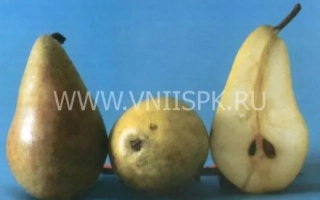
Summer variety, developed at the Institute of Irrigated Horticulture of UAAN by breeders P. V. Grozditsky, I. N. Boyko, E. A. Avramenko, G. I. Kulikov, I. N. Maximova from crossing the varieties Bere Bosk and Tolstobezhka. The variety is approved for the North Caucasus region.
Medium-sized tree with a medium-dense, rounded-pyramidal crown. The predominant fruiting type is ring clusters.
Relatively late start of vegetation and flowering allows avoiding damage to flowers from spring frosts.
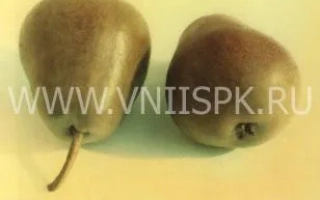
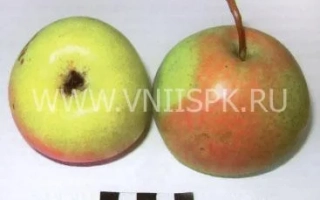
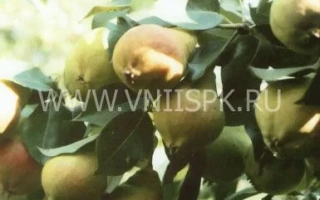
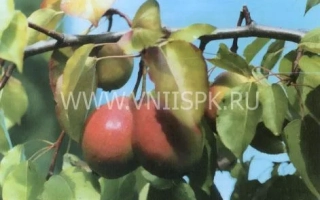
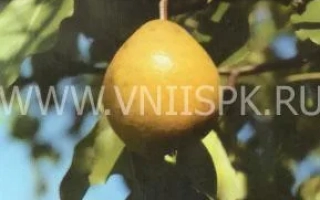
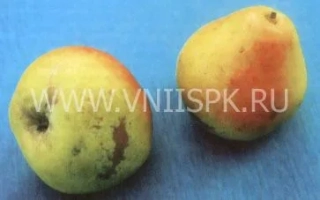
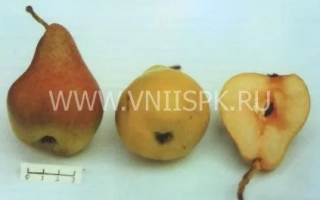
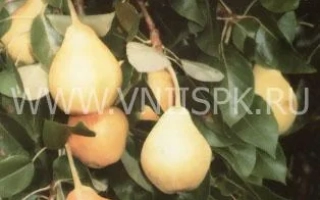
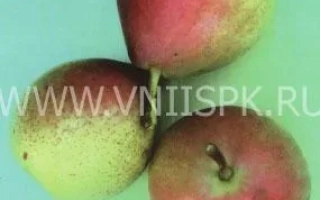
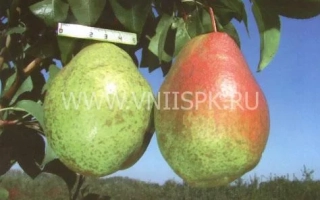
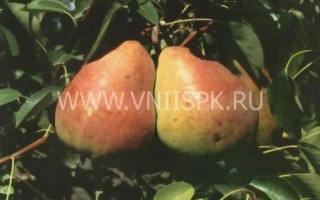
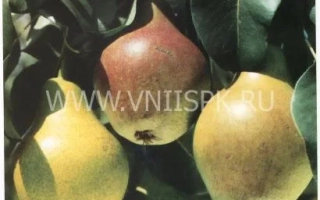
Fruits are above average size, properly shaped pear-shaped, single. Skin is smooth. Color during harvest maturity is greenish-yellow with a bright purplish blush on most of the fruit surface. Under-skin dots are small, clearly visible, numerous. Peduncle is long and curved. Receptacle is closed, dish is small and smooth.
Flesh is white, tender, without granules, juicy, slightly acidic-sweet, aromatic, very good taste. Under Kuban conditions, fruits contain sugars — 7.8%, titratable acids — 0.40%, dry matter — 13.0%, ascorbic acid — 5.8 mg/100g, P-active catechins — 38.0 mg/100g.
Harvest maturity of fruits occurs from August 20 to 30. Fruits remain firmly on the tree. Fruit set is high. Fruits store for about a month, and significantly longer under artificial cooling. Fruit transportability is good. Fruits are mainly consumed fresh.
Partially self-fertile, significantly prone to parthenocarpic fruiting.
Trees begin fruiting in the 6th-7th year after planting in orchards, fruit annually; high yield. High cold resistance and drought resistance, moderate heat tolerance. Resistant to scab.
Advantages of the variety: high cold resistance and resistance of trees to scab, annual and abundant fruiting, high taste and commercial quality of fruits.
Disadvantages of the variety: insignificant.