


Prices in stores
No offers yet — stores have not added prices for this product yet.
Similar varieties with prices
-
Original
from 2.75 €per seedling
-
 TalismanFRSC
from 1.95 €per seedling
TalismanFRSC
from 1.95 €per seedling
-
 MOLDOVA
from 1.96 €
MOLDOVA
from 1.96 €
-
 GALBENA NOUProduction and Agrarian Association "Massandra"
from 2.75 €per seedling
GALBENA NOUProduction and Agrarian Association "Massandra"
from 2.75 €per seedling
Usage Group
Table
Ripening Period
Early
Frost Resistance
High (up to -24°C)
Resistance to Mildew
High
Your mark
0 votes
0% positive ratings
Description
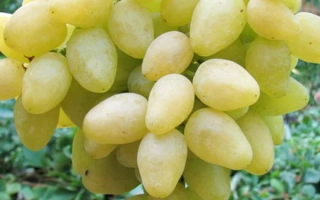
The Golden grape variety is an early-ripening table grape, distinguished by large and very large clusters weighing from 450 to 700 grams. The clusters have a wide-conical shape, moderately loose structure, and branching. The berries are large, round or slightly oval, light green in color, acquiring an amber-white hue at full maturity. The pulp is fleshy and juicy with a thin skin that is practically not felt during consumption. The taste is harmonious with a pleasant muscat aroma; sugar accumulation reaches 20 Brix, while juice acidity is 6-7 g/L. The average berry weight varies from 7 to 8 grams, and the berries contain seeds.
The Golden variety bushes are vigorous with high growth force and bisexual flowers. The variety is characterized by high yield and good harvest transportability. It fruits well with both long and short pruning, and the number of clusters per shoot ranges from 1.1 to 1.5. Shoots ripen well, cuttings root easily, and with proper soil preparation, the plant begins to bear fruit already in the second year. In case of freezing of primary buds, the variety is capable of quickly recovering from replacement buds, which ensures its resistance to spring frosts. Thanks to enhanced frost resistance (up to -22 to -24°C) and resistance to diseases such as downy mildew, gray rot, and powdery mildew, Golden can be grown in an open form.
The origin of the variety is associated with a complex interspecific hybrid obtained from crossing Frumoasa Albă and Korinka Russian. The ripening period is about 110-120 days, which allows harvesting in mid-August in southern regions of Russia. The main purpose of the variety is fresh consumption, thanks to its excellent taste qualities and attractive appearance of the berries.
The Golden variety bushes are vigorous with high growth force and bisexual flowers. The variety is characterized by high yield and good harvest transportability. It fruits well with both long and short pruning, and the number of clusters per shoot ranges from 1.1 to 1.5. Shoots ripen well, cuttings root easily, and with proper soil preparation, the plant begins to bear fruit already in the second year. In case of freezing of primary buds, the variety is capable of quickly recovering from replacement buds, which ensures its resistance to spring frosts. Thanks to enhanced frost resistance (up to -22 to -24°C) and resistance to diseases such as downy mildew, gray rot, and powdery mildew, Golden can be grown in an open form.
The origin of the variety is associated with a complex interspecific hybrid obtained from crossing Frumoasa Albă and Korinka Russian. The ripening period is about 110-120 days, which allows harvesting in mid-August in southern regions of Russia. The main purpose of the variety is fresh consumption, thanks to its excellent taste qualities and attractive appearance of the berries.
Crop & resistance
Crop
Disease resistance
Specifications
| Usage Group | |
|---|---|
| Ripening Period | Early |
| Frost Resistance | |
| Resistance to Mildew | |
| Resistance to oidium | |
| Resistance to Gray Mold | |
| Yield | High |
| Bush Growth Power | |
| Flower Type | |
| Bunch Size | Large (500–800 g) |
| Berry Size | Large (5–8 g) |
| Berry Color | |
| Flavor | |
| Sugar Content | High (>20%) |
| Zoning | |
| Care Requirement | |
| Purpose | |
| Features | |
| Registration year | 2021 |
| Catalog | Catalog → Grape |
| Manufacturer | FRSC |
| Legal data |
Show · 1 |
| Country | Russia |
No reviews yet. Be the first to share your experience.
Alternatives
Grapevine saplings · similar varieties



TEACHER'S MEMORY
Omsk State Agrarian University named after P.A. Stolypin
063 15 offers
2.61 €per seedling ≈ 133 ₴


See also
Often considered together with this variety


Recently viewed
Products you’ve viewed on this site
Reviews