


SKU #62119
·
63 views
Grape Pinotage
Grape
Usage Group
Wine
Ripening Period
Early
Resistance to oidium
Average
Resistance to Gray Mold
Low
Your mark
0 votes
0% positive reviews
Store offers · 1 from 1 store
1 offer in 1 store — from 3.98 € per seedling.
Available at: Приватная Марка
Prices are collected automatically from store websites and converted at the current exchange rate. Check the price and availability on the store website before ordering.
About product
Technical variety for high-quality wines with high sugar content and early ripening.
Description
Focus on High Sugar Content and Early Harvest
The "Pinotage" variety, bred by Valery Zakharin, is a professional choice for winemakers focused on producing rich, concentrated raw materials. As an early-ripening technical grape, it allows for harvesting before the heavy autumn rains begin, which is crucial for mitigating the risk of gray mold, to which this variety has low resistance.
Agrotechnical Management and Protection
High yields and large clusters (500–800 g) require strict control over vine load. The main challenge when managing Pinotage is implementing a robust protection strategy. Since its resistance to oidium is moderate and its resistance to gray mold is low, growers must:
- Ensure excellent airflow in the fruiting zone through timely trimming and thinning of excess shoots.
- Implement a rigorous fungicide schedule, focusing on preventive treatments for mold during the ripening phase.
- Perform precise cluster thinning to prevent vine overload, ensuring the high sugar levels (>20%) are maintained.
Winemaking Economics
This variety is ideal for crafting wines with a deep, fruit-forward profile. Thanks to its high sugar accumulation, Pinotage produces powerful, full-bodied wines that are highly valued in professional winemaking. It is an excellent selection for high-quality single-varietal wines or complex blends where a strong fruit character is required. Its consistent productivity makes it a reliable asset for vineyards specializing in industrial grape processing.
Video · 3 videos
Suggest a video →Crop & resistance
Crop
Disease resistance
Specifications
| Usage Group | |
|---|---|
|
Ripening Period
Ripening Period
It takes 70-100 days until pepper reaches flowering stage, 130-160 days until technical fruit ripeness, and 135-180 days until physiological ripeness. |
Early |
| Resistance to oidium | |
| Resistance to Gray Mold | |
|
Yield
Yield
Overall bulb harvest per unit area. Depends on both onion variety characteristics and agronomic practices, fertilizers, and irrigation. Under optimal growing conditions, an onion yield of 100 tons per hectare and above is not considered record-breaking. |
High |
| Bunch Size | Large (500–800 g) |
| Berry Color | |
| Flavor | |
| Sugar Content | High (>20%) |
| Assignment | |
| Registration year | 2022 |
| Catalog | Catalog → Grape |
| Legal data |
Show · 1
|
| Country | Russia |
Not yet комментариев. Be the first!
Alternatives
Grapevine saplings · similar varieties
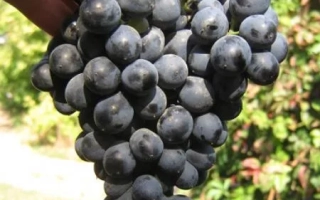

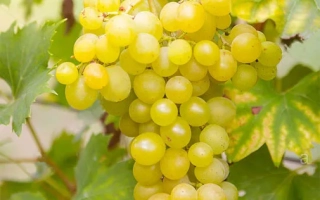

Saperavi
ФГБОУ ВО Омский государственный аграрный университет имени П.А. Столыпина
066 4 offers
3.89 €per seedling ≈ 196 ₴



See also
Often considered together with this variety





Recently viewed
Products you’ve viewed on this site
Reviews