

SKU #62118
·
62 views
Palava
Grape
LLC 'SHUMRINKA'User rating
0 votes0% positive reviews
No ratings yet — be the first.
Usage Group
Technical
Ripening Period
Medium
Cold Resistance
Average (up to -21°C)
Resistance to Mildew
Low
About product

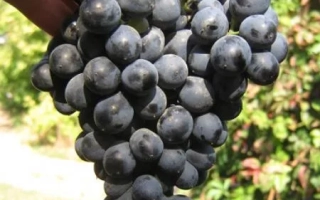
Palava is a grape variety of Czech breeding, developed in Moravia by the breeder Josef Weverka through the crossbreeding of Gewürztraminer (Rot Traminer) and Müller Thurgau varieties. This variety is characterized by medium vine growth vigor and medium ability to sucker. Palava leaves are round, five-lobed, with a large-veined upper side and felted down. Bunches are conical, dense, of medium size,…
Usage Group
Technical
Ripening Period
Medium
Cold Resistance
Average (up to -21°C)
Resistance to Mildew
Low
Description
Palava is a grape variety of Czech breeding, developed in Moravia by the breeder Josef Weverka through the crossbreeding of Gewürztraminer (Rot Traminer) and Müller Thurgau varieties. This variety is characterized by medium vine growth vigor and medium ability to sucker. Palava leaves are round, five-lobed, with a large-veined upper side and felted down. Bunches are conical, dense, of medium size, weighing about 200 grams, and berries are small, round or slightly oval, grayish-pink in color with thick and tough skin. The flesh is juicy, with a slight aroma reminiscent of Gewürztraminer. The variety belongs to the medium ripening period, technical maturity occurs in mid-to-late September at a sum of active temperatures of 2650-2800 °C. Yield is stable and average compared to technical grape varieties, yet higher than that of the parent Gewürztraminer. Palava requires moist and fertile soils for optimal development. The vine ripens well, however, the variety has low disease resistance, especially to mildew and gray rot, and needs winter covering. Frost resistance is medium - the vine withstands a temperature drop to -22 °C without significant damage. Wine material from Palava is characterized by a balanced taste with higher acidity content compared to Gewürztraminer, which positively affects the wine structure. The wine is usually less spicy, with dominant vanilla notes and medium aging potential. Thanks to its characteristics, the variety is widely used for the production of fresh grapes with an aroma reminiscent of Traminer, as well as for the production of quality wines with a unique bouquet.
Crop & resistance
Crop
Disease resistance
Specifications hover over for a hint about the specification
| Usage Group | |
|---|---|
|
Ripening Period
Ripening Period
It takes 70-100 days until pepper reaches flowering stage, 130-160 days until technical fruit ripeness, and 135-180 days until physiological ripeness. |
Medium |
| Cold Resistance | |
| Resistance to Mildew | |
| Resistance to Gray Mold | |
|
Yield
Yield
Overall bulb harvest per unit area. Depends on both onion variety characteristics and agronomic practices, fertilizers, and irrigation. Under optimal growing conditions, an onion yield of 100 tons per hectare and above is not considered record-breaking. |
Average |
| Bush Growth Power | |
| Bunch Size | Medium (300–500 g) |
| Berry Size | Fine (<2 g) |
| Berry Color | |
| Flavor | |
| Care Requirement | |
| Assignment | |
| Registration year | 2025 |
| Catalog | Catalog → Grape |
| Manufacturer | LLC 'SHUMRINKA' |
| Country | Russia |
Store offers
Prices are updated on loadLoading offers…
Aggregator catalog: prices are collected automatically from store websites, normalized by AI and converted at the current exchange rate. Before ordering, confirm the price and availability on the store's website. This block is not indexed by search engines — the data is loaded after the page opens.
Not yet комментариев. Be the first!
Alternatives
Grapevine saplings · similar varieties


Saperavi
ФГБОУ ВО Омский государственный аграрный университет имени П.А. Столыпина
066 4 offers
3.77 €per seedling ≈ 195 ₴




See also
Often considered together with this variety




Recently viewed
Products you’ve viewed on this site
Reviews · 0