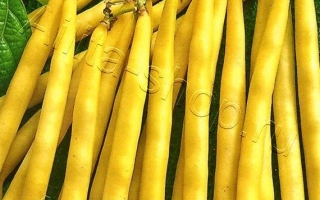
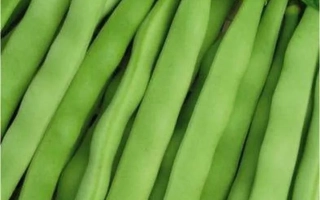
The Marusya vegetable bean variety belongs to the mid-season group with a vegetative period of 85-89 days. The plant is bush-type, upright, of medium height (approx. 46 cm), with dark green, small, slightly wrinkled leaves and medium-sized white flowers. The pods are light green, straight, long, and narrow, with a round cross-section and a short beak, without a parchment layer or fibers, ensuring excellent product taste. Upon maturity, the pods do not split, which enhances their commercial appearance and ease of use.
Marusya demonstrates high yield: the average yield of green beans is 6.7 tons/hectare, and of seeds — 2.5 tons/hectare, which exceeds the indicators of some foreign varieties. The mass of 1000 seeds ranges from 230 to 290 g; the seeds are white, kidney-shaped, and of medium size. The variety is resistant to anthracnose and lodging, contributing to a stable harvest and reduced losses during cultivation.
Marusya beans are distinguished by high nutritional and technological characteristics. Protein content in green beans reaches 16.2%, and important microelements are also present: iron (5.64 mg/kg), zinc (17.5 mg/kg), iodine (0.44 mg/kg), and calcium (0.72%). Green beans are suitable for culinary use, canning, and freezing, while maintaining their taste quality and economic viability for a long time. These features make the variety competitive and in demand for cultivation and processing.