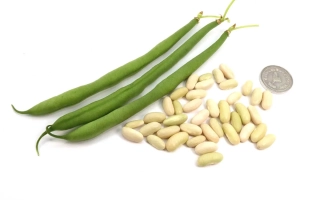
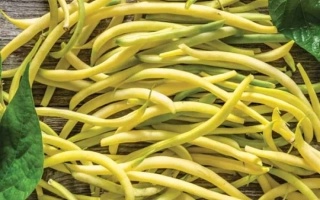
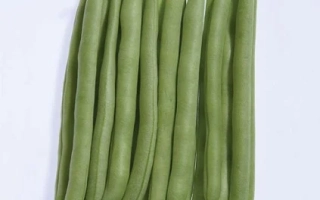
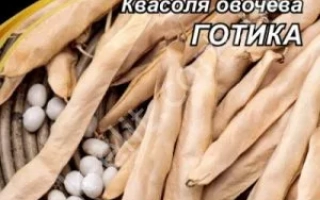
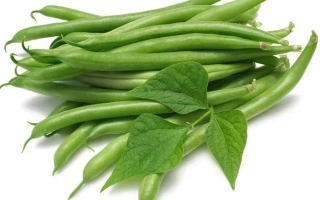
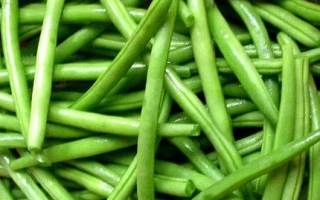
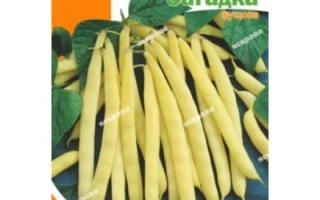
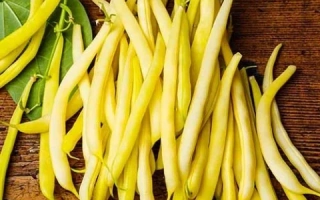
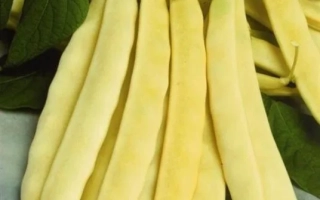
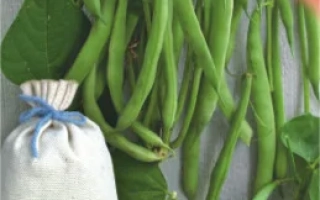
Bogema bean is a medium-late, high-yielding variety of snap bean, distinguished by its meaty, flattened, golden-colored pods. The plant is vining and reaches a height of 2.5 to 2.8 meters, requiring mandatory support during cultivation. The bean pods, measuring 20-25 cm in length and 2-2.5 cm in width, are fiber-free, making them especially convenient for preparing various dishes. Bogema has a tender and pleasant taste, highly appreciated by both farmers and households.
This bean variety matures in approximately 75 days and is characterized by high yield — from 8 to 15 tons per hectare. Bogema is versatile in culinary use: it is used for soups, stews, braised dishes, salads, and canning. Due to its excellent taste qualities, this bean is suitable for winter preservation, such as with tomatoes, and also serves as an excellent addition to borscht. Additionally, Bogema bean is low-maintenance and can grow on various soil types, including less fertile ones, and tolerates partial shade.
Growing Bogema bean requires adherence to certain agronomic practices. Seeds are soaked for 24 hours and sown in open ground from May, when air temperature consistently exceeds +23 degrees Celsius, at a depth of 5-7 cm. The distance between plants in a row is 10-12 cm, and between rows — about 40 cm. After germination, soil should be loosened and fertilized: the first application — nitrogen-phosphorus — three weeks after planting, the second — phosphorus-potassium — before flowering begins. For optimal growth, the bean requires sunlight, fertile soil, and pairs well with crops such as sunflower and corn, which can provide support and beneficial shade during hot hours.