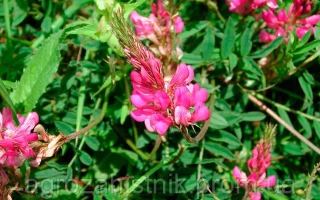
Espartite "Yuzhnoukrainsky" – a perennial legume crop, valued as a nectar-producing and fodder plant. The plant is characterized by high nectar productivity: under favorable conditions, nectar yield can reach 250 kg/hm², with an average of 100–150 kg/hm². Flowering begins in the second year after planting (and can occur in the first year in a mild climate), spanning May–July, which provides bees with a stable nectar source at the start of the season. Espartite honey has an amber hue, a pleasant aroma, and slow crystallization; it possesses antiseptic and tonic properties.
The plant's fodder value is high: green mass yield exceeds the standard by 27.8%, and protein content is increased by 39.6% compared to the average variety. Espartite is easy to grow in a wide range of soils – from light to clay loam, but it does not tolerate acidic and marshy areas. Plant height is 70–80 cm, and the vegetation period is 60–70 days. Thanks to its powerful root system, the plant improves soil structure and enriches it with nitrogen, reducing the need for additional fertilizers.
Care for "Yuzhnoukrainsky" is minimal: frequent watering is not required, the plant is drought-resistant (high degree) and frost-hardy up to –25 °C. Seeds are sown in spring (April–May) or in autumn at a depth of 1.5–3 cm; germination is possible at temperatures of +6…+8 °C. Espartite is also used as a cover crop, improving soil and suppressing root rot of medium resistance. In conclusion, this variety represents a universal solution for beekeepers, farmers, and gardeners, combining high productivity, ease of cultivation, and benefits for the ecosystem.