


SKU #74569
·
56 views
Ingulskyi
Sainfoin
User rating
0 votes0% positive reviews
No ratings yet — be the first.
Usage Type
On feed
Crude Protein Content, %
15-19
Registration year
1978
About product

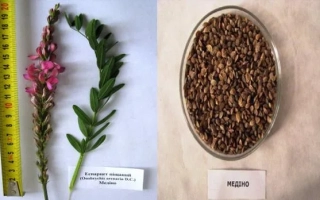
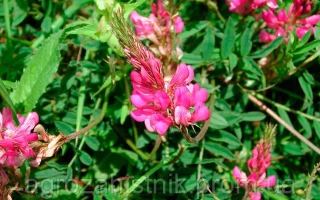
A reliable forage sainfoin variety known for high protein content and exceptional drought resistance.
Usage Type
On feed
Crude Protein Content, %
15-19
Registration year
1978
Description
A Reliable Source of Protein for Livestock Farming
The «Ingulskyi» sainfoin variety is a product of long-term breeding by the Kirovohrad IAAS NAAS, designed as a robust tool for establishing a high-quality forage base. Within the diverse climatic conditions of the Ukrainian steppes, this variety has established a reputation as a dependable perennial crop with strong regenerative capacity.
Agronomic Value and Forage Quality
The primary advantage of the «Ingulskyi» variety lies in its balanced chemical composition. With crude protein content ranging from 15% to 19%, it serves as a high-value component for ruminant diets. Unlike many other legumes, sainfoin is noted for its high palatability and the absence of bloating issues, making it an ideal choice for both grazing and hay production.
- Application: Strictly forage-oriented, suitable for both haymaking and pasture grazing.
- Resilience: The variety exhibits significant drought tolerance and winter hardiness, critical attributes for regions with high climatic risk.
- Soil Health: Its deep, powerful root system actively improves soil structure and promotes nitrogen fixation, effectively enhancing soil fertility for subsequent crops.
«Ingulskyi» is highly regarded by farmers who prioritize cost-effective feed production. Its reliability is proven by its ability to provide consistent yields even in low-moisture seasons. By utilizing this variety, producers can achieve high-quality forage with reduced reliance on synthetic fertilizers, leveraging the plant's natural efficiency in nutrient uptake from deep soil horizons.
Crop & resistance
Crop
Specifications
| Usage Type | |
|---|---|
| Crude Protein Content, % | 15-19 |
| Registration year | 1978 |
| Catalog | Catalog → Sainfoin |
| Legal data |
Show · 1
|
| Country | Ukraine |
Store offers
Prices are updated on loadLoading offers…
Aggregator catalog: prices are collected automatically from store websites, normalized by AI and converted at the current exchange rate. Before ordering, confirm the price and availability on the store's website. This block is not indexed by search engines — the data is loaded after the page opens.
Not yet комментариев. Be the first!





See also
Often considered together with this variety



Recently viewed
Products you’ve viewed on this site
Reviews · 0