


SKU #48629
·
80 views
Winter
Beans
User rating
0 votes0% positive reviews
No ratings yet — be the first.
Assignment
Celestial
Growing Conditions
Open Ground
Registration year
2022
About product

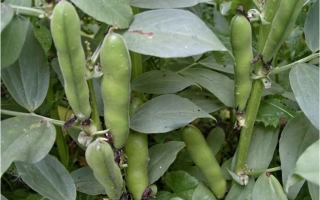
A high-performance leguminous cover crop developed in Ukraine for soil enrichment and fertility restoration.
Assignment
Celestial
Growing Conditions
Open Ground
Registration year
2022
Description
'Winter' Cover Crop: Enhancing Soil Health Through Legume Technology
Choosing the right cover crop is a strategic move for modern soil management. 'Winter,' a specialized variety developed by the Ukrainian originator Iksgp Naan, has established itself as a key tool for improving soil quality in open-field agriculture.
The Agronomic Profile
The core value of 'Winter' lies in its rapid biomass accumulation and nitrogen-fixing capabilities. As a legume crop, it acts as a biological engine, capturing atmospheric nitrogen and enriching the soil structure naturally. Unlike cereal cover crops, this specific variety is optimized to improve aeration and moisture permeability, making it an essential component for regenerative farming practices.
Why Growers Select 'Winter'
- Soil Restoration: Intensive organic matter accumulation that revitalizes depleted soils.
- Phytosanitary Benefits: Natural suppression of soil-borne pathogens and weed interference.
- Local Adaptation: Bred by Iksgp Naan specifically for Ukrainian soil and climatic conditions, ensuring consistent emergence and performance.
Integrating 'Winter' into a crop rotation cycle allows producers to transition away from excessive mineral fertilizer dependence toward more ecological farming practices. This Ukrainian-developed variety represents a reliable, field-tested solution for farmers aiming to improve long-term field productivity and soil sustainability.
Specifications
| Assignment | |
|---|---|
| Growing Conditions | |
| Registration year | 2022 |
| Catalog | Catalog → Beans |
| Legal data |
Show · 1
|
| Country | Ukraine |
Store offers
Prices are updated on loadLoading offers…
Aggregator catalog: prices are collected automatically from store websites, normalized by AI and converted at the current exchange rate. Before ordering, confirm the price and availability on the store's website. This block is not indexed by search engines — the data is loaded after the page opens.
Not yet комментариев. Be the first!






See also
Often considered together with this variety







Recently viewed
Products you’ve viewed on this site
Reviews · 0