


SKU #37857
·
60 views
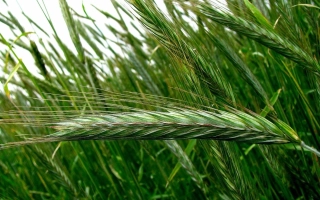
Barley Loreley
Barley
NORDSAAT SAATZUCHTUser rating
0 votes0% positive reviews
No ratings yet — be the first.
Plant Type
Winter Barley
Culm; Number of Rows
Six-row
Plant Height
90-100cm
Seed; mass 1.000seeds
48-50 grams
Prices in stores
from0.19 €per 1 kg
pack from 194.03 € per 1 t
4 offers from 3 stores
Store offers · 4 from 3 stores
Prices are updated on loadLoading offers…
Available at: Хаском Трейд · Agrotorg · Матла Фловерс · Tolko
Aggregator catalog: prices are collected automatically from store websites, normalized by AI and converted at the current exchange rate. Before ordering, confirm the price and availability on the store's website. This block is not indexed by search engines — the data is loaded after the page opens.
About product

Six-row winter barley with powerful immunity and large grains for consistently high yields.
Plant Type
Winter Barley
Culm; Number of Rows
Six-row
Plant Height
90-100cm
Seed; mass 1.000seeds
48-50 grams
Description
Stable yields with German breeding
The Loreley six-row winter barley from the Nordsaat Saatzucht breeding house is a tool for agronomists who prioritize reliability and predictable results. With a plant height of 90–100 cm, the variety forms a robust ear capable of withstanding heavy loads, which minimizes the risk of lodging under intensive cultivation technologies.
Phytosanitary potential
A key feature of this variety is its comprehensive resistance to a wide range of pathogens that traditionally affect winter cereals. In conditions of high humidity, when the risk of foliar diseases increases, Loreley shows high resistance to:
- Mycosphaerella blotch;
- Plant rust;
- Rhynchosporium;
- Powdery mildew;
- Brown blotch.
Notably, the variety possesses genetic resistance to net blotch and leaf rust. This allows the farmer to optimize spending on fungicide protection, reducing the number of field operations and overall costs for crop protection products.
Production characteristics
The variety is characterized by excellent grain filling. The thousand-kernel weight ranges from 48 to 50 grams, ensuring high test weight indicators. By choosing Loreley, agricultural producers receive a crop adapted to climate risks, capable of demonstrating stable marketable output even in years with unfavorable phytosanitary backgrounds. It is ideal for producing high-quality feed, featuring excellent protein content and energy value.
Crop & resistance
Crop
Specifications
| Plant Type | |
|---|---|
| Culm; Number of Rows | |
| Plant Height | 90-100cm |
| Seed; mass 1.000seeds | 48-50 grams |
| Registration year | 2016 |
| Catalog | Catalog → Barley |
| Manufacturer | NORDSAAT SAATZUCHT |
| Country | Germany |
Not yet комментариев. Be the first!
Alternatives
Barley seeds · similar varieties





See also
Often considered together with this variety




Recently viewed
Products you’ve viewed on this site
Reviews · 0