Summer variety from the Sverdlovsk Experimental Garden Station. Obtained by L. A. Kotov through pollination with a mixture of pollen from Melsby, Dream, and Candy. As a new variety, it has gained significant popularity in the Ural region and is undergoing state testing.
Medium-sized tree, with a broad-conical crown in youth, then rounded, cold-resistant, early-bearing, and high-yielding. Main branches have a grayish-brown-yellow bark, initially raised upward, but over time, under the weight of fruit, they spread outward. Fruit set is concentrated on simple and complex buds and on last year’s growth.
Medium-thick shoots, straight, ridged, yellowish-brown (brown), hairy. Leaves are elongated-oval, light green, matte, with serrated edges. Petioles of medium length, with small lanceolate stipules.
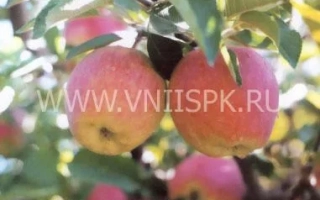
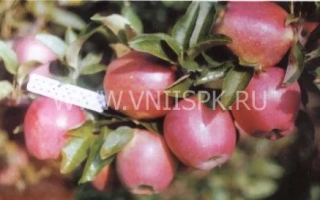
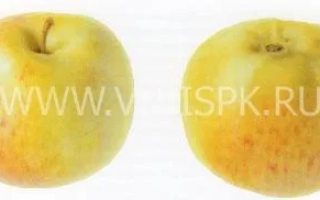
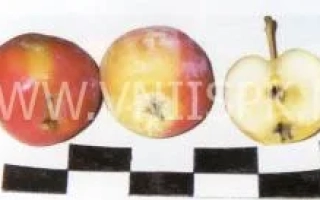
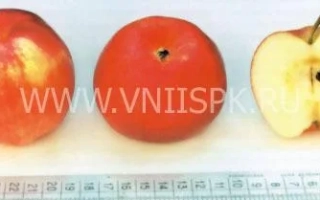
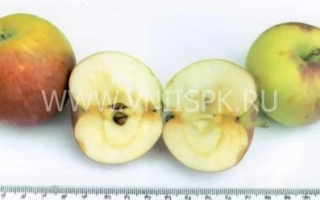
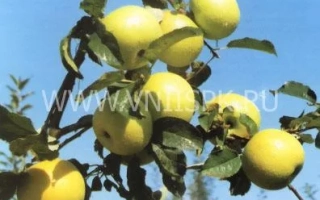
Fruits of medium size, weighing 95–110 g, round-conical, high, symmetrical, slightly ribbed. Skin dry and smooth. Color uniform, pale-yellow, without a covering blush, sometimes with a slight, weak sunburn.
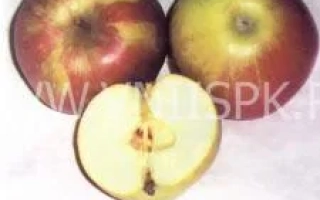
Flesh is creamy, coarse-grained, moderately juicy, with good sour-sweet taste. Chemical composition of the fruit: soluble solids — 13.4%, total sugars — 9.9%, titratable acids — 0.76% (0.5–0.98)%, ascorbic acid — 18.4 mg/100g (15.0–23.7), polyphenols (catechins) — 260.3 mg/100g (221.2–361.6).
Fruits ripen in Yekaterinburg in late August. Intended for table use.
Fruit production begins on the fourth to fifth year after budding.
Fruits and leaves are resistant to scab.
Advantages of the variety: cold resistance, early fruiting, scab resistance, relatively large fruit size.
Disadvantages of the variety: loose flesh.