


SKU #69551
·
48 views
CIRKUL
Amaranth
North Caucasian FARCUser rating
0 votes0% positive reviews
No ratings yet — be the first.
Usage Type
On feed
Vegetation Period
120-130
Plant Height
150-200
Leaf Color
Green
Prices in stores
from600 €per 1 kg
pack from 0.12 € per 0.2 g
1 offer from 1 store
Store offers · 1 from 1 stores
Prices are updated on loadLoading offers…
Available at: Analit Agro
Aggregator catalog: prices are collected automatically from store websites, normalized by AI and converted at the current exchange rate. Before ordering, confirm the price and availability on the store's website. This block is not indexed by search engines — the data is loaded after the page opens.
About product

Amaranth of the Cirkul variety is a promising agricultural crop intended for feeding animals and poultry, as well as for use in the food industry and production of functional products. Plants reach a height of 135-160 cm, have an upright ribbed stem without lateral branching and elongated-oval green leaves. The inflorescence is panicle-shaped, 40-50 cm long, dense and complexly branched. Seeds are…
Usage Type
On feed
Vegetation Period
120-130
Plant Height
150-200
Leaf Color
Green
Description
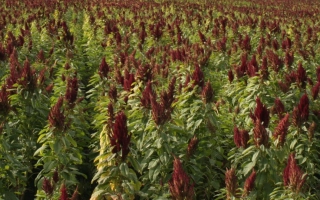
Amaranth of the Cirkul variety is a promising agricultural crop intended for feeding animals and poultry, as well as for use in the food industry and production of functional products. Plants reach a height of 135-160 cm, have an upright ribbed stem without lateral branching and elongated-oval green leaves. The inflorescence is panicle-shaped, 40-50 cm long, dense and complexly branched. Seeds are cream-colored, weigh 0.8-0.9 g per 1000 pieces, contain up to 19% protein and 7.1% fat, as well as a range of essential amino acids and vitamins. The vegetative period is 60-65 days until the beginning of flowering and 98-110 days until full seed maturity.
The Cirkul variety is characterized by high leafiness, powerful development, and resistance to drought, pests, and diseases. Green mass yield reaches 710-840 c/ha (c/ha), dry matter — 140-155 c/ha, and seeds — 22.8-24.0 c/ha. Amaranth green mass is used to obtain quality feed, silage, vitamin meal, and granules, which are well consumed by all types of domestic animals, including ducks, chickens, rabbits, pigs, and cows. Introducing amaranth into the diet contributes to increasing the herd size, improving feed digestibility due to high lysine content, and reducing animal diseases.
In addition to feed purposes, Cirkul amaranth seeds are used in the food industry for the production of healthy food products. Amaranth flour can be added to wheat flour for the manufacture of high-value pasta. Oil from seeds contains tocopherols, carotenoids, and squalene — a unique natural substance in demand in the pharmaceutical and cosmetic industries. Sowing requires only 0.5-1 kg of seeds per hectare, making the crop economically profitable and environmentally sustainable.
The Cirkul variety is characterized by high leafiness, powerful development, and resistance to drought, pests, and diseases. Green mass yield reaches 710-840 c/ha (c/ha), dry matter — 140-155 c/ha, and seeds — 22.8-24.0 c/ha. Amaranth green mass is used to obtain quality feed, silage, vitamin meal, and granules, which are well consumed by all types of domestic animals, including ducks, chickens, rabbits, pigs, and cows. Introducing amaranth into the diet contributes to increasing the herd size, improving feed digestibility due to high lysine content, and reducing animal diseases.
In addition to feed purposes, Cirkul amaranth seeds are used in the food industry for the production of healthy food products. Amaranth flour can be added to wheat flour for the manufacture of high-value pasta. Oil from seeds contains tocopherols, carotenoids, and squalene — a unique natural substance in demand in the pharmaceutical and cosmetic industries. Sowing requires only 0.5-1 kg of seeds per hectare, making the crop economically profitable and environmentally sustainable.
Crop & resistance
Crop
Specifications
| Usage Type | |
|---|---|
| Vegetation Period | 120-130 |
| Plant Height | 150-200 |
| Leaf Color | |
| Weight of 1000 seeds, g | 0.8, 0.9 |
| Potential green mass yield (t/ha) | 60-80 |
| Grain Assignment | |
| Assignment of green mass | |
| Registration year | 2007 |
| Catalog | Catalog → Amaranth |
| Manufacturer | North Caucasian FARC |
| Legal data |
Show · 8
|
| Country | Russia |
Not yet комментариев. Be the first!





See also
Often considered together with this variety





Recently viewed
Products you’ve viewed on this site
Reviews · 0