

Disease · viral
Tomato brown rugose fruit virus
Tobamovirus fructirugosum
Description
Symptoms
Symptoms often include leaf mosaic, chlorotic mottling, and severe leaf deformation that can mimic other physiological disorders.
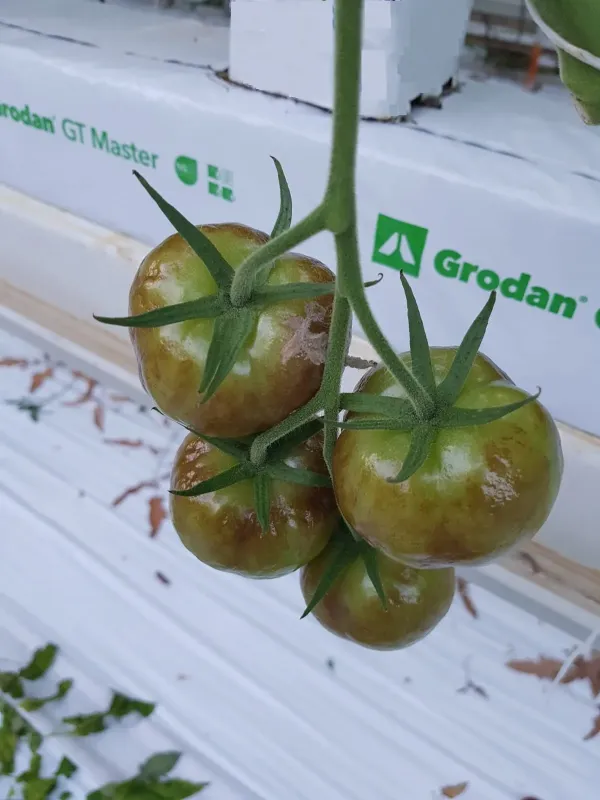
Fruits exhibit characteristic brown or yellow rugose patches, irregular ripening, and deep wrinkles that ruin the fruit's marketability.
Necrosis on the peduncles and calyxes may occur, often leading to flower drop and reduced overall fruit set.
Symptom expression can vary depending on the tomato cultivar's genetic resistance and the prevailing environmental conditions.
Some plants may remain asymptomatic for a period while still acting as a reservoir for spreading the infection to neighboring plants.
Pathogen
The causal agent of this disease is the Tomato brown rugose fruit virus (ToBRFV), which is a member of the Tobamovirus genus.
This virus is known for its extreme resilience and stability, allowing it to persist for long periods on surfaces, tools, and even within seeds.
The primary transmission route is mechanical, occurring through routine handling, contaminated tools, and contact between plants.
Pollinators, such as bumblebees, can act as vectors, physically moving the virus from infected to healthy plants during the pollination process.
Due to its high environmental stability, the virus remains infectious even after being exposed to harsh conditions, complicating greenhouse sanitation.
Conditions for development
The development of the virus is significantly favored by high temperatures, which enhance the replication rate of the pathogen.
Dense plant populations in greenhouse environments create high-risk scenarios where contact-based transmission becomes inevitable.
Inadequate sanitation protocols regarding tool disinfection between plant rows are the leading cause of viral outbreaks.
The virus spreads most effectively during labor-intensive tasks like pruning, harvesting, and tying, especially when personnel hygiene is neglected.
Seasonal peaks in temperature and light intensity can exacerbate symptom severity in already infected tomato crops.
Why it matters
The economic impact is devastating, as ToBRFV can cause yield losses ranging from significant reductions to total crop failure.
Market value is severely compromised due to the unsightly, deformed nature of the infected fruit, making them unsellable for fresh markets.
Outbreaks force producers to undertake costly disinfection procedures, often requiring the total removal of plants and downtime for facilities.
The presence of the virus can lead to long-term quarantine restrictions, limiting the ability to ship produce to certain markets.
Ongoing control costs, including testing and intensified sanitation, represent a heavy financial burden for commercial greenhouses.
Protection
The most effective strategy is the use of ToBRFV-resistant tomato hybrids, which are currently the primary line of defense.
Implement strict hygiene measures, including mandatory disinfection of hands, tools, and work clothes before entering greenhouse zones.
Rapid identification and removal of symptomatic plants are essential to prevent the virus from spreading throughout the entire greenhouse.
All seed sources must be certified and tested for the presence of the virus to avoid introducing it into the production cycle.
- Use approved disinfectant solutions for all farm equipment.
- Restrict traffic between different production modules.
- Maintain rigorous records of greenhouse inspections.
Content graph
Connections · Tomato brown rugose fruit virus
Most often together:
Marketplace
Products · 31


Community
Discussion
No discussions yet — be the first.