
Disease · fungal · affects Papaya, Watermelon
Especially harmful
Papaya ringspot virus
Papaya ringspot virus
Description
Symptoms
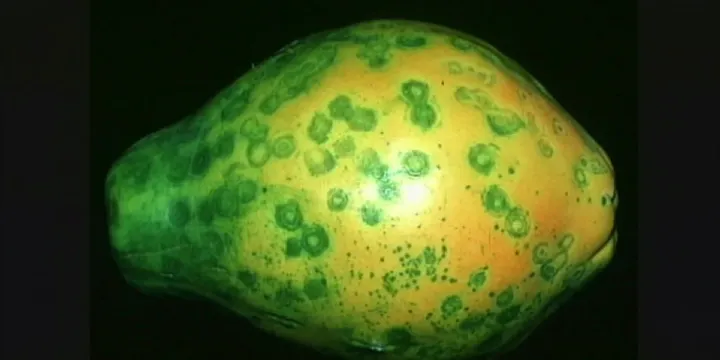
The characteristic symptoms of this disease in papaya include yellow mosaic patterns on leaves and distinct circular rings or spots on the fruit surface. These spots are often lighter in color than the surrounding skin, and the fruit may become bumpy or distorted over time.
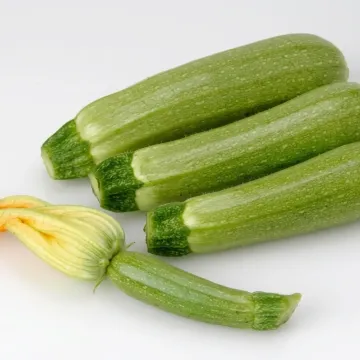
In cucurbits like watermelons and pumpkins, the virus causes severe leaf curling and a mosaic pattern of yellow and green areas. Infected plants often show stunted growth, and the younger leaves may become narrow or string-like, which is a classic symptom of severe PRSV infection.
Plants affected by this virus exhibit a significant reduction in overall vigor and productivity. The stems may develop oily, dark-green streaks, and the apical meristem often shows signs of necrosis or complete cessation of normal development in advanced stages.
Fruits from infected plants are often undersized and lack the flavor and quality expected for commercial produce. This renders them unsuitable for market, resulting in a total loss of economic value for the affected portion of the crop.
Diagnostic identification can be tricky as the symptoms often mimic those of other mosaic viruses. Professional diagnostics, such as ELISA or PCR, are necessary to differentiate PRSV from other systemic viral infections prevalent in the area.
Pathogen
The causal agent is the Papaya ringspot virus (PRSV), a member of the Potyvirus genus. It is a non-enveloped, flexuous, filamentous virus containing a single-stranded positive-sense RNA genome that replicates within the cytoplasm of host cells.
The virus is divided into two primary strains: PRSV-P, which infects papaya, and PRSV-W, which targets various cucurbits. While genetically similar, they have distinct host ranges and epidemiological behaviors, making management challenging.
Transmission occurs primarily through the stylets of aphids in a non-persistent, non-circulative manner. The aphid acquires the virus within seconds by probing an infected plant and can transmit it immediately to a healthy host, making the virus incredibly efficient at spreading.
The virus does not have a persistent association with its insect vector, meaning the aphid loses its ability to transmit the virus after a short period or after feeding on a few healthy plants. However, the sheer number of aphids in a field ensures constant reinfection.
There is no known seed transmission for the papaya-infecting strain, but the virus is highly infectious mechanically. This means that wounding of plant tissues during pruning or farm operations can also contribute to the local spread of the disease.
Conditions for development
Disease outbreaks are closely linked to aphid population dynamics. Warm, dry weather conditions facilitate the movement of aphid colonies between fields, which significantly increases the rate of virus transmission among the crop plants.
Continuous cropping systems, common in tropical regions, provide an endless supply of host plants for the virus. When there is no fallow period, the virus reservoir remains present in the environment throughout the entire year.
Weed management plays a crucial role in the development of the disease. Many wild plant species, particularly in the Cucurbitaceae family, act as hidden reservoirs for the virus, allowing it to persist even when the main commercial crop is not present.
High planting density, while productive, can facilitate the rapid movement of aphids from plant to plant. Once an index case is established in the field, the virus can sweep through a densely planted area in a matter of weeks.
Environmental stress, such as drought or nutrient deficiency, can exacerbate the impact of the virus on the plant. Although these stresses do not cause the virus, they make the plants more susceptible to systemic decline and decrease their natural resilience.
Why it matters
The economic impact of PRSV is severe, often resulting in 100% loss of market-ready fruit. For papaya farmers, this virus has historically been the primary constraint on production, sometimes forcing entire industries to relocate or shut down.
In addition to physical damage, the virus leads to systemic physiological impairment. The reduction in photosynthetic efficiency due to mosaic symptoms results in poor fruit set, lower yields, and a weakened plant that cannot recover even with optimal fertilization.
Management costs are a significant burden for producers. Because there is no chemical cure for the virus, farmers must invest in continuous monitoring, pest control, and sometimes the implementation of expensive exclusion systems.
Small-scale farmers are particularly vulnerable, as a single outbreak can destroy their entire subsistence or commercial crop for the season. The loss of produce quality often means that even surviving plants do not contribute to the household income.
The virus also creates long-term challenges for crop rotation. Because the virus remains in weeds and perennial hosts, it creates a persistent threat that makes it difficult to re-introduce susceptible crops into infected areas for several years.
Protection
The foundation of PRSV control is the use of healthy, virus-free planting stock. Ensuring that all transplants are free from the virus before they enter the field is the most important step in preventing initial outbreaks.
Spatial isolation is a key strategy for managing the virus. Planting susceptible crops far from existing infected fields or native weed populations significantly delays the arrival of aphid vectors and the subsequent spread of the virus.
Early detection and sanitation are essential. Regular scouting of the field to identify and rogue (remove) infected plants immediately can prevent the virus from moving from a single source to the rest of the plantation.
Insecticide application targeting aphids is a common practice, but it has limitations. Because transmission is so rapid, the insecticide often fails to kill the aphid before it has already passed the virus to the plant.
- Use of virus-resistant varieties or transgenic papaya (where permitted).
- Implementation of reflective mulch to deter aphids from landing.
- Stringent weed control to eliminate virus reservoirs.
- Strict field hygiene and cleaning of equipment to prevent mechanical transmission.
In brief
2
Affects crops
Biology
Pathogens and affected parts
Affected plant parts
whole plant
Content graph
Affects crops · 2
Content graph
Connections · Papaya ringspot virus
Most often together:
Marketplace
Products · 15


Community
Discussion
No discussions yet — be the first.