
Tomato black ring virus
Nepovirus nigranuli
Description
Symptoms
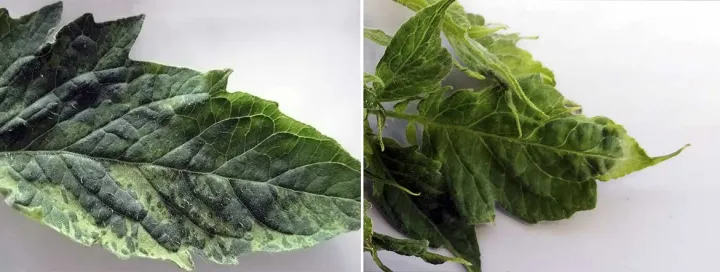
The primary symptom of the disease is the appearance of chlorotic or necrotic rings on the leaves of tomato plants. Over time, these spots may turn black, creating a distinct ring-like pattern that gives the disease its common name and significantly damages the foliage.
Infected plants often show signs of stunted growth and reduced vigor. Leaves may become distorted, curled, or smaller than normal, which severely limits the plant's ability to photosynthesize and develop normally during the growing season.
Fruit symptoms include ring spots, necrotic streaking, and skin discoloration. In severe cases, the fruit surface becomes bumpy and misshapen, drastically reducing the market value and commercial appeal of the harvest.
Internal tissue necrosis can occur within the fruits, often leading to premature fruit drop. Systemic infection typically causes a mosaic-like pattern to appear on all parts of the plant, including stems and petioles, indicating widespread viral distribution.
Visual diagnosis is often insufficient because the symptoms can mimic those of other viral or fungal diseases. Laboratory confirmation using ELISA or molecular techniques is recommended to accurately detect the presence of the virus in plant tissue.
Pathogen
The disease is caused by the Tomato black ring virus, a member of the Nepovirus genus. These viruses are characterized by their spherical structure and are known for being transmitted by soil-inhabiting nematodes.
The virus has a high capacity for systemic movement within the host plant. Once it enters the root system, it utilizes the plant's vascular tissue (phloem) to spread rapidly to the growing points, flowers, and developing fruits.
TBRV has a wide host range, which makes it particularly difficult to manage in agricultural settings. It can persist in various weed species and crop residues, maintaining a reservoir of infection that can easily jump to tomato plants.
Transmission occurs primarily through the feeding activities of nematodes in the genera Xiphinema and Longidorus. These vectors feed on root sap and simultaneously introduce the virus into the healthy plant's vascular system.
Mechanical transmission also plays a role in the spread of the virus. Contaminated tools, such as pruning shears or knives, can transfer the viral particles from an infected plant to a healthy one during routine maintenance activities.
Conditions for development
The disease development is heavily influenced by the activity of nematode vectors, which thrive in moist, structured soils. Sandy and silty-loam soils provide the most favorable environment for these organisms to move and reproduce.
Temperature plays a key role in the rate of viral replication and symptom expression. Moderate temperatures facilitate rapid viral spread throughout the plant, often leading to more pronounced and severe clinical manifestations.
The presence of the virus in the soil remains a significant risk factor, especially in fields with a history of intensive tomato production. The pathogen can survive for long periods in soil, waiting for a susceptible host to be planted.
In greenhouse environments, the use of non-sterilized soil or growing media is a critical factor. Reusing soil from a previous season without adequate disinfection provides a direct pathway for the virus to infect new seedlings.
Plants under stress, whether from nutrient imbalances, waterlogging, or environmental fluctuations, are significantly more susceptible to viral infections. A weakened immune system reduces the plant's natural ability to contain the initial viral invasion.
Why it matters
The most significant impact of the virus is a drastic reduction in total crop yield. Infected plants often stop flowering or experience severe fruit drop, which can lead to nearly total crop failure in heavily infested areas.
The quality of the harvested fruit is severely degraded, making it unsuitable for either the fresh market or processing. Disfigured and spotted fruits result in significant financial losses for growers due to waste and market rejection.
Viral infection accelerates the aging process of the plant, shortening its productive life cycle. This prevents the plant from reaching its full potential, reducing the total amount of harvestable material throughout the growing season.
Because there are no curative chemical treatments for viral infections, the disease poses a long-term economic challenge. Once a plant is infected, it remains a permanent source of inoculum that can jeopardize neighboring healthy crops.
The presence of TBRV can render a field unsuitable for tomato cultivation for several years. This forces growers to implement costly crop rotations or invest in extensive soil treatment protocols to eliminate the virus and its nematode vectors.
Protection
The most effective strategy for managing the virus is the use of healthy, virus-free certified planting material. Ensuring that seedlings are free of the virus before planting is the first and most important line of defense.
Managing the population of nematode vectors is essential. This can be achieved through soil fumigation, the use of resistant rootstocks, or crop rotation with non-host species that help suppress nematode numbers.
Rigorous weed control in and around the fields is crucial, as many weeds act as natural reservoirs for the virus. Keeping the area clean minimizes the chance of viral vectors migrating from wild hosts to the tomato crop.
In greenhouses, maintaining strict hygiene protocols is vital. Tools and equipment should be disinfected between tasks, and workers should practice good sanitation, such as washing hands, to prevent mechanical transmission of the virus.
Prompt identification and removal of infected plants are necessary to limit the spread. The entire plant, including the root system and surrounding soil, should be carefully removed and destroyed away from the field to ensure that no inoculum remains.
Discussion
No discussions yet — be the first.