
Raspberry ringspot virus
Nepovirus rubi
Description
Symptoms
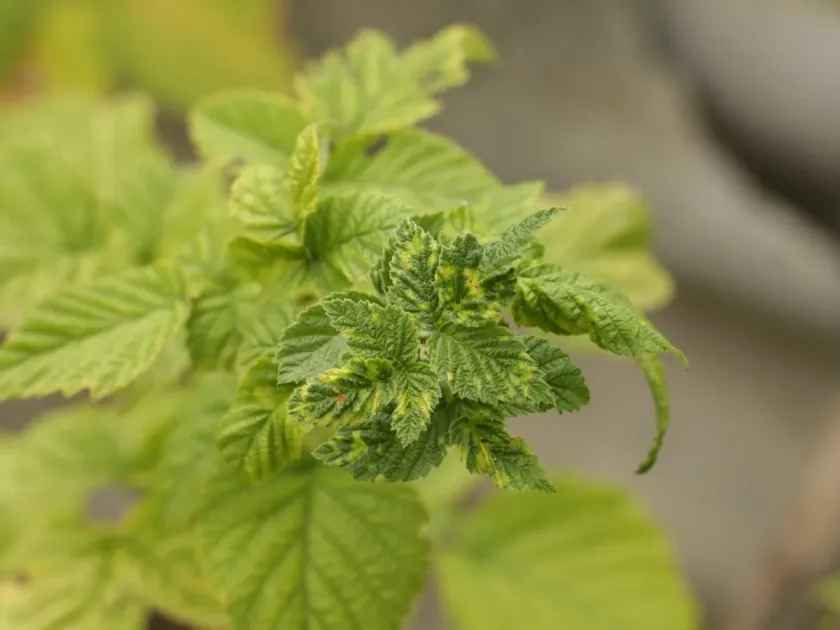
Infected plants typically display chlorotic spots, rings, and line patterns on the leaves, which are the most prominent diagnostic symptoms.
Stunting of canes and a reduction in the overall size of leaves are frequently observed, indicating systemic infection of the vascular tissues.
Affected raspberry bushes often show a patchy distribution within the field, reflecting the localized movement of nematode vectors in the soil.
During the fruiting season, the quantity and quality of berries are significantly reduced, often resulting in crumbly, misshapen, or very small fruit.
In chronic cases, the plant vigor declines steadily, leading to increased susceptibility to winter damage and secondary pathogen infestations.
Pathogen
The Raspberry ringspot virus (RRSV) is a plant pathogenic virus belonging to the Nepovirus genus, characterized by its wide host range including raspberries.
It is a soil-borne pathogen that persists in the environment for long durations, making it difficult to eradicate once a field is contaminated.
The virus particle structure is stable, allowing it to survive in the rhizosphere and interact effectively with specific soil vectors for transmission.
Primary transmission is facilitated by ectoparasitic nematodes of the Longidorus genus, which acquire the virus while feeding on infected roots.
RRSV can also be transmitted through infected seeds of common weeds, which act as a reservoir and ensure the virus remains in the ecosystem.
Conditions for development
Moist soil conditions are essential for the activity of Longidorus nematodes, which require water films to migrate between roots.
The virus thrives in areas where suitable host weeds are present, as these provide a year-round shelter for both the virus and its nematode vectors.
Heavy soils that maintain high moisture content provide the most favorable environment for the proliferation of nematode populations.
Increased movement of soil via farm machinery can accelerate the spread of the virus from contaminated spots to healthy areas of the plantation.
Temperature fluctuations in spring and autumn coincide with the peak feeding and movement activity of the vectors in the soil profile.
Why it matters
The primary economic impact is a severe reduction in marketable yield, rendering the cultivation of susceptible raspberry varieties unprofitable.
Plants infected with RRSV undergo progressive decline, which often forces growers to abandon and destroy established plantations prematurely.
Reduced fruit quality makes the produce unsuitable for fresh markets, leading to significant financial losses for commercial fruit producers.
The virus weakens the plants' immune response, making them more vulnerable to root rot and stem blight, further accelerating the plant death.
The persistence of the virus in the soil means that replanting healthy stock in the same location is often unsuccessful without prior soil fumigation.
Protection
The use of certified virus-free planting material is the foundation of an effective disease management program in raspberry orchards.
Pre-planting soil testing for the presence of virus-transmitting nematodes is highly recommended to identify potential risk areas.
Maintaining a strict weed-free environment around and within the raspberry rows is crucial to eliminate the virus's natural reservoirs.
Prompt roguing, including the removal of the root system of infected bushes, is necessary to limit the localized spread of the virus.
Implementing crop rotations with nematode-suppressive green manure crops can significantly reduce the soil-borne nematode population before planting.
Discussion
No discussions yet — be the first.