
Tobacco ringspot virus
Nepovirus nicotianae
Description
Symptoms
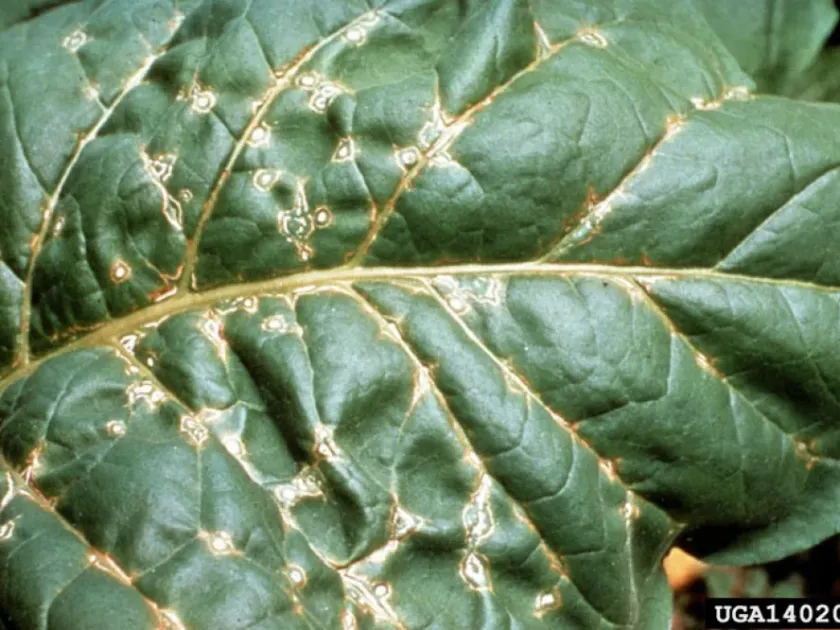
The most iconic symptoms of TRSV infection are the development of chlorotic or necrotic rings, patterns, and line-like markings on the leaf surfaces of infected plants.
Plants often exhibit stunted growth, leaf deformation, and distinct puckering or crinkling of the foliage. The reduction in leaf area severely impairs the plant's photosynthetic capacity.
Floral symptoms may include color breaking, blossom distortion, and reduced seed set due to pollen sterility, which is a major concern for seed production facilities.
Fruits and pods of infected plants may show irregular patterns or necrosis, which significantly diminishes the aesthetic and commercial quality of the produce.
In many host species, the infection can remain latent, meaning the plant shows no obvious symptoms while still serving as a reservoir for further transmission to healthy plants.
Pathogen
Tobacco ringspot virus (TRSV) is a plant pathogenic virus classified under the genus Nepovirus. It is a single-stranded RNA virus known for its ability to cause severe diseases in a diverse range of botanical hosts.
The virus possesses a notably broad host range, infecting various economically important crops, including tobacco, soybeans, cucurbits, and numerous ornamental flowering plants.
Transmission occurs primarily through the soil-inhabiting dagger nematode, Xiphinema americanum, which acts as a specific biological vector for the virus while feeding on plant roots.
Mechanical transmission is another critical pathway, occurring through contaminated agricultural tools, human handling during cultivation, or direct contact between infected and healthy plants.
Furthermore, the virus is seed-borne and pollen-borne in many species, which allows for efficient long-distance dispersal of the pathogen and complicates eradication efforts in nurseries.
Why it matters
The primary economic impact of TRSV is the significant reduction in yield quantity and quality. Infected crops often produce smaller, malformed fruits or leaves, leading to market rejection.
For the tobacco industry, TRSV infection compromises the structural integrity and quality of the cured leaf, rendering it unsuitable for high-grade commercial use.
By weakening the overall vigor of the host plant, TRSV infections increase the plant's susceptibility to other biotic stressors, such as fungal pathogens and bacterial infections.
In high-density greenhouse environments, the rapid spread of the virus can lead to catastrophic losses, necessitating the destruction of entire plant populations to control the outbreak.
The persistence of the virus in the soil, linked to its nematode vector, creates long-term management challenges and often requires lengthy periods of land fallowing or chemical treatment.
Protection
Effective management begins with the use of certified, virus-free seeds and planting material. Testing nursery stock before transplanting is a standard protocol for prevention.
Control of the Xiphinema nematode population is crucial. This can be achieved through crop rotation with non-host species or the application of authorized soil nematicides to reduce vector numbers.
Sanitation is paramount in greenhouse operations. Regularly disinfecting tools, equipment, and surfaces helps prevent the mechanical spread of the virus by workers.
Rogueing, the prompt identification and removal of infected plants including their root zones, is essential to minimize the spread of the virus in newly established plantings.
Weed control both within and surrounding the fields is necessary, as many common weeds act as overwintering hosts for both the virus and its nematode vectors.
Discussion
No discussions yet — be the first.