
Maize eyespot
Maize eyespot virus
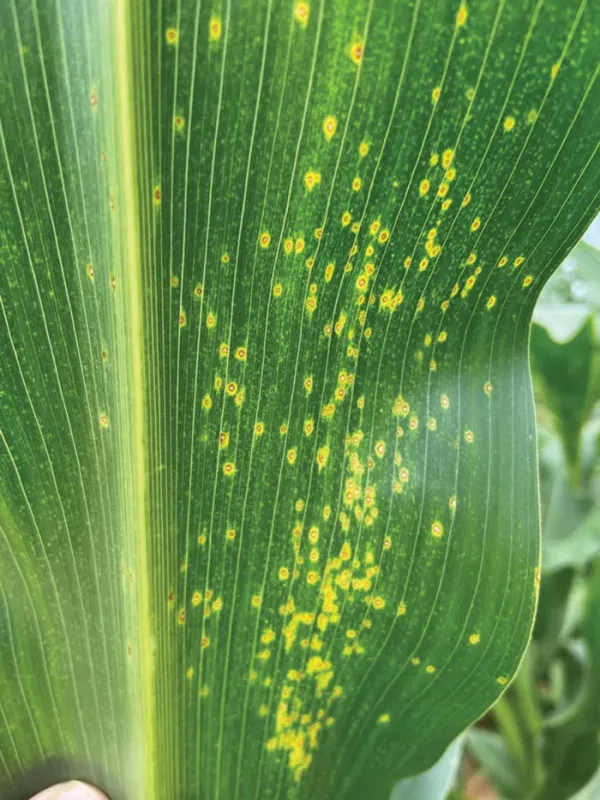
Description
Symptoms
Initial symptoms appear as small, circular or oval-shaped spots on leaves, typically ranging from 1 to 5 mm in diameter.
The hallmark of the disease is a straw-colored or translucent center in each lesion, surrounded by a distinct dark green, brown, or yellowish ring.
In cases of severe infection, numerous spots merge, causing large patches of necrotic tissue that lead to premature drying of the leaves.
Under high humidity, a sparse, greyish fungal growth may be visible on the surface of the lesions, indicating active sporulation.
Affected leaves eventually become brittle and turn brown, significantly reducing the plant's capacity for photosynthesis during critical development stages.
Pathogen
The causative agent of this disease is the fungus Aureobasidium zeae (formerly known as Kabatiella zeae), which is classified as an imperfect fungus.
The pathogen survives the winter in infected corn debris left on the soil surface, remaining viable as mycelium or conidia until the following season.
In spring and early summer, moisture triggers the production of spores on the residues, which are then disseminated to healthy leaves via rain splashes and wind.
The fungus penetrates leaf tissue directly, leading to the formation of characteristic lesions that serve as secondary sources of inoculum.
The infection cycle can repeat multiple times during the growing season if environmental conditions remain conducive to fungal growth and spore germination.
Conditions for development
Eyespot development is strongly favored by cool and damp weather conditions during the early stages of the corn's growth.
Temperatures ranging from 15 to 20 degrees Celsius are considered optimal for the infection process and the rapid proliferation of the fungus.
Frequent rainfall, heavy morning dews, and high relative humidity levels facilitate the spread of the pathogen throughout the canopy.
Fields with poor air circulation or those located in low-lying areas are particularly prone to higher levels of disease severity.
Warm, dry weather in mid-to-late summer typically inhibits the further progression of the disease and slows down the fungal activity.
Why it matters
The primary impact of eyespot is the reduction of the photosynthetic leaf area, which directly impairs grain filling and overall crop yield.
Significant leaf area loss can result in reduced kernel weight and lower grain quality, leading to measurable economic losses for farmers.
Plants severely weakened by the disease exhibit lower resistance to secondary pathogens and may experience increased rates of stalk lodging.
Early-onset infections are generally more damaging, as they hinder the plant's ability to accumulate biomass during the vital stages of growth.
Yield loss varies based on hybrid susceptibility, weather patterns, and the timing of the initial fungal colonization of the crop.
Protection
Crop rotation is an essential management practice that disrupts the fungal life cycle by reducing the carryover of inoculum from the previous year.
Deep plowing or mechanical tillage to bury infected corn residue accelerates the decomposition process and reduces the risk of initial infection.
Selecting and planting genetically resistant hybrids is the most effective and sustainable strategy to mitigate the impact of maize eyespot.
Maintaining spatial distance from previous year's corn fields can help protect new crops from airborne spore dispersal.
- Application of foliar fungicides if the disease threshold is reached.
- Optimizing plant density for better canopy aeration.
- Balancing soil fertility to ensure robust plant health.
Discussion
No discussions yet — be the first.