
Tomato ringspot virus
Nepovirus lycopersici
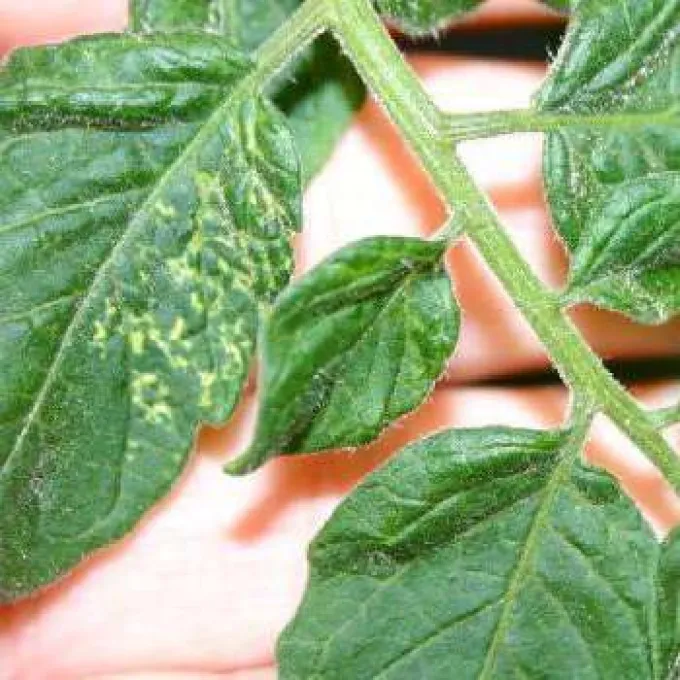
Description
Symptoms
The primary symptom of Tomato ringspot virus (ToRSV) infection is the development of clear chlorotic rings, arcs, or zigzag patterns on the foliage. In some cases, the symptoms manifest as mosaic patterns or mild vein clearing.
Apical growth is often stunted, with leaves exhibiting distortion and curling. Affected plants frequently show significant dwarfism and shortened internodes, leading to a generally suppressed and weak appearance of the plant.
Fruits produced by infected plants are often undersized, deformed, and may display necrotic spotting or a mottled appearance. These quality issues render the fruit unsalable and unsuitable for fresh markets.
Symptom expression can vary widely depending on the plant cultivar, the age at which infection occurred, and prevailing environmental conditions. High temperatures and drought stress often exacerbate the visual symptoms.
Visual diagnosis can be misleading due to the similarity with other virus-induced diseases. Precise identification requires laboratory confirmation using ELISA, PCR, or other modern serological or molecular techniques.
Pathogen
The pathogen responsible for this disease is the Tomato ringspot virus (ToRSV), a member of the genus Nepovirus. It is a single-stranded RNA virus known for its exceptionally wide host range, affecting many vegetables, fruits, and woody plants.
The virus particles are isometric, measuring approximately 28–30 nanometers in diameter. It moves systemically through the plant's vascular system, ensuring that once established, the virus spreads to all parts of the host plant.
A distinctive biological feature of ToRSV is its transmission via soil-borne nematodes, specifically species within the family Longidoridae (e.g., Xiphinema). The nematodes acquire the virus by feeding on the roots of infected plants and transmit it to healthy ones.
Seed transmission is another critical pathway, allowing the virus to spread across long distances via trade in planting materials. Mechanical transmission through pruning and handling is also possible, though less common than vector-borne spread.
The virus persists in the roots of perennial weeds and wild plants, which act as stable reservoirs of infection in the field, making the complete eradication of the pathogen extremely difficult.
Conditions for development
The spread of ToRSV is strongly linked to the presence of vector nematodes in the soil. Optimal soil moisture levels facilitate the migration of these nematodes, allowing them to effectively reach and colonize healthy plant roots.
Environmental factors, particularly temperature, play a crucial role in virus replication and symptom development. Warmer climates usually accelerate the viral life cycle within the host tissues, leading to more rapid plant decline.
The presence of weeds in or around the cultivation area provides a consistent source of inoculum. Many of these plants are symptomless carriers that maintain the virus in the environment throughout the year.
The use of infected seed or vegetative propagation material is a primary factor in the outbreak of the disease in commercial plantations. Without rigorous quarantine measures, the virus can easily enter new production areas.
Agricultural practices such as monoculture and the lack of proper crop rotation contribute to the buildup of nematode populations, significantly increasing the probability of widespread virus transmission within the fields.
Why it matters
The economic impact of ToRSV is significant, with yield losses often ranging from 30 to 70 percent depending on the infection pressure and the stage of the plant's development when it was initially attacked.
Reduced quality, including deformation and poor coloring of fruits, leads to high rejection rates at harvest. This significantly diminishes the profitability of the tomato enterprise.
Infected plants exhibit reduced vigor and weakened immune responses, making them much more susceptible to other biotic and abiotic stresses, including secondary bacterial and fungal infections.
Because the virus has a broad host range, its presence poses a threat not only to tomatoes but also to other crops such as grapes, raspberries, and various ornamental plants, complicating farm management.
Since there are no curative treatments for viral diseases in the field, the presence of the virus necessitates the removal and destruction of entire sections of the crop to prevent further spread of the pathogen.
Protection
The most effective management strategy is the use of healthy, virus-free certified planting materials. Strict adherence to quarantine and nursery hygiene standards is essential for preventing the introduction of the virus.
Managing vector populations is critical. This involves the application of appropriate nematicides and physical treatments to reduce the number of Longidorid nematodes in the soil prior to planting.
A rigorous weed control program is vital to eliminate alternative hosts that serve as virus reservoirs. Clearing field margins and irrigation channels of weeds helps break the virus's survival cycle.
Prompt roguing of infected plants, including the removal of their root systems, is necessary to minimize the risk of virus spread. All equipment used for maintenance must be disinfected to prevent mechanical transmission.
Implementing long-term crop rotation cycles with non-host crops and conducting deep tillage can help suppress nematode populations and reduce the overall infection pressure on the site.
Discussion
No discussions yet — be the first.