
Prunus necrotic ringspot virus
Ilarvirus pnrsv
Description
Symptoms
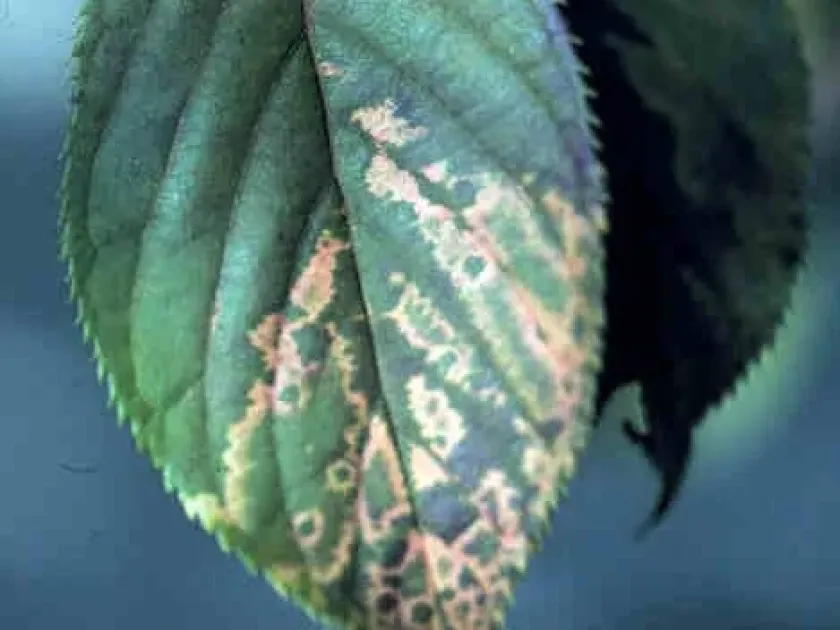
Symptoms are most visible in the early spring, appearing on young leaves as chlorotic rings, wavy lines, or circular spots. These areas often turn necrotic as the leaf matures.
A distinctive feature of the infection is the "shot-hole" effect, where the dead tissue within the spots falls out, leaving small holes in the foliage, which can be mistaken for fungal disease.
Affected branches may exhibit stunted growth, with shortened internodes. In severe cases, there may be dieback of the twigs and a general decline in the overall vigor of the tree.
Fruit symptoms include reduced size, irregular shape, and premature ripening. In some sensitive cultivars, the fruit may become unmarketable due to these malformations.
- Chlorotic rings and line patterns on leaves.
- Necrotic spots leading to shot-hole symptoms.
- Stunting of terminal shoots and branch dieback.
- Deformed fruit and poor crop yield.
- General loss of tree vitality.
Pathogen
The causative agent of the disease is the Prunus necrotic ringspot virus (PNRSV), which belongs to the Ilarvirus genus. It is a widespread plant virus primarily affecting Prunus species, including cherries, peaches, and plums.
The virus particle is spherical and contains a single-stranded RNA genome. Its high degree of genetic variability contributes to its ability to persist and spread efficiently across different orchard environments.
The transmission of PNRSV occurs mainly through infected grafting materials. Using virus-carrying budwood or rootstocks during the propagation process ensures that the virus spreads into new orchards.
Pollen-borne transmission is a critical pathway for the spread of the virus within established orchards, as the virus can move between trees during the pollination phase.
The virus induces a systemic infection, meaning it colonizes the entire plant, including the vascular tissues, which makes curing infected trees impossible with current chemical treatments.
Conditions for development
The manifestation of symptoms is heavily influenced by environmental conditions, particularly favoring cool and moist weather during the early growing season.
Warm temperatures often cause the symptoms to be "masked," meaning the virus is still present, but visible signs on the leaves diminish, making detection difficult.
The presence of insect pollinators is a major factor in the spread of the virus, as they transport infected pollen from diseased trees to healthy ones during flowering.
Poor orchard hygiene practices, such as using unsterilized pruning tools, significantly increase the risk of transferring the virus from infected to healthy trees within an orchard block.
High-density planting systems can exacerbate the problem, as closer proximity between trees facilitates easier transmission of the virus through pollen and mechanical contact.
Why it matters
The economic impact of PNRSV is substantial, often resulting in significant yield losses ranging from 20% to 50% in heavily infected stone fruit orchards.
The disease reduces the long-term productivity and lifespan of the trees, often necessitating the early removal and replanting of entire orchard blocks.
Fruit quality is severely compromised, making the produce less attractive or entirely unsuitable for commercial sale, thus impacting the grower's profitability.
Trees infected with the virus show increased susceptibility to secondary stressors, including drought, nutrient deficiencies, and winter frost damage.
The cumulative effect of these factors is a gradual collapse of the orchard's productive potential, leading to significant financial loss for the producer.
Protection
The primary management strategy is the use of virus-free nursery stock. Growers must ensure that all planting material is certified and tested using reliable techniques like ELISA or PCR.
Implementing strict sanitation protocols is essential. All pruning tools should be disinfected with a 10% bleach solution or 70% alcohol between trees to prevent mechanical transmission.
Regular orchard monitoring is necessary to identify and rogue out infected trees. Removing the source of inoculum is crucial to slowing down the spread in a localized area.
Establishing proper spatial isolation from known infected orchards or older, non-tested plantings can help reduce the influx of virus-carrying pollen.
Integrating a comprehensive pest management program helps control the movement of pollinators or insects that might facilitate the transmission of the virus within the orchard.
Discussion
No discussions yet — be the first.