
Xanthomonas citri
Xanthomonas citri
Description
How to identify
Xanthomonas citri is a gram-negative, rod-shaped, motile bacterium belonging to the Xanthomonadaceae family. It is the primary pathogen responsible for citrus canker, a highly contagious disease affecting various citrus species.
The bacterium features a single polar flagellum, allowing it to navigate through water films on plant surfaces. It is known for its ability to produce exopolysaccharides, which create a protective biofilm aiding survival and attachment.
Infection primarily occurs through natural openings like stomata and hydathodes or through mechanical wounds caused by wind, insects, or pruning tools. Once inside, the pathogen colonizes the intercellular spaces of the leaf, fruit, or twig tissue.
Genetic diversity within the species includes various pathotypes, which differ in their level of aggressiveness towards specific host plants. This necessitates precise laboratory testing for accurate strain identification.
Detection methods include PCR amplification and ELISA, which are crucial for early diagnosis, as visual symptoms might be mistaken for other bacterial or fungal leaf spots in their initial stages.
What it damages
The pathogen severely affects most commercially cultivated citrus, including oranges, lemons, limes, and grapefruits. It causes lesions on leaves, stems, and fruit, significantly compromising tree health and crop marketability.
Heavy infections lead to premature abscission of leaves and young fruit. This dramatic reduction in fruit set can cause near-total crop loss in susceptible varieties during high-pressure seasons.
On twigs and branches, the bacterium causes necrosis, leading to twig dieback and a general decline in the tree's vigor. Such damage creates entry points for other opportunistic pathogens, further weakening the tree.
Infected fruit often develop unsightly, corky scabs that make them unmarketable. This causes massive economic losses for growers who must adhere to strict international trade standards regarding citrus canker.
Seedlings and young nursery stock are particularly vulnerable; a single infection can lead to the destruction of entire nursery batches, ensuring the disease does not spread to new orchards.
When it appears
Xanthomonas citri thrives in warm, humid climates, with optimal growth occurring at temperatures between 20°C and 30°C. Frequent rainfall is the primary driver of disease progression.
Wind-driven rain facilitates the dispersal of bacterial cells from active lesions to healthy plant tissue. Insects like the citrus leafminer also contribute to the spread by creating wounds that the bacteria readily colonize.
The most susceptible period for infection is during active growth flushes, when young, succulent leaves and fruits have open stomata, making it easier for the bacteria to enter the host plant.
During dry, hot seasons, the pathogen enters a dormant state, residing in old lesions or within the protective crevices of the bark until environmental conditions improve, triggering a new wave of infections.
Orchard management must be closely aligned with the tree's phenological stages, with preventative measures increased during rainy periods or when new, tender growth is most prominent.
Signs of infestation
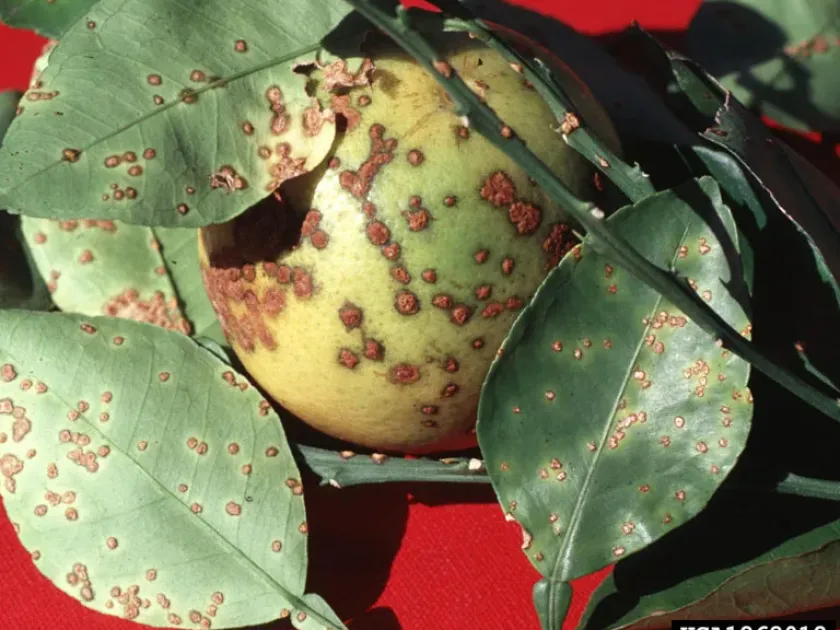
Symptoms begin as small, water-soaked spots that eventually become raised, corky pustules. These lesions are typically surrounded by a characteristic yellow chlorotic halo, especially on younger leaves.
- Raised, brown, scab-like lesions on the foliage.
- Corky, crater-like pustules on the fruit rind.
- Cracking of the bark on young shoots and twigs.
- Distortion and premature yellowing of leaves.
- Widespread fruit and leaf drop during heavy outbreaks.
Fruit lesions can coalesce, creating large, distorted scabby areas that penetrate the rind. The center of these lesions often releases a bacterial exudate, especially under high humidity.
The visual characteristics of the lesions change as they age; they start as light-colored spots and turn dark brown or grey with time. Their gritty, raised texture is a diagnostic feature used in the field.
Accurate field identification relies on recognizing these distinct raised lesions, as flat spots are often indicative of different diseases or environmental physiological disorders.
Control measures
Strict quarantine and regulatory programs are the first line of defense, aiming to prevent the introduction of infected plant materials into non-infested regions or countries.
In areas where the disease is established, eradication is the primary control measure. This involves destroying infected trees to remove the source of inoculum and limit further spread to neighboring healthy trees.
Copper-based bactericides remain the standard chemical control. Regular applications are recommended during periods of new shoot growth and in seasons characterized by high rainfall to provide a protective barrier.
Sanitation is critical; all tools used for pruning or harvesting must be thoroughly disinfected with approved sanitizers between trees to prevent mechanical transmission of the pathogen by human activity.
Breeding and planting resistant or tolerant citrus cultivars represents the most sustainable long-term strategy for managing the disease, significantly reducing the reliance on aggressive chemical sprays.
Causes diseases · 1
Discussion
No discussions yet — be the first.