
Petunia grandiflora
Petunia grandiflora
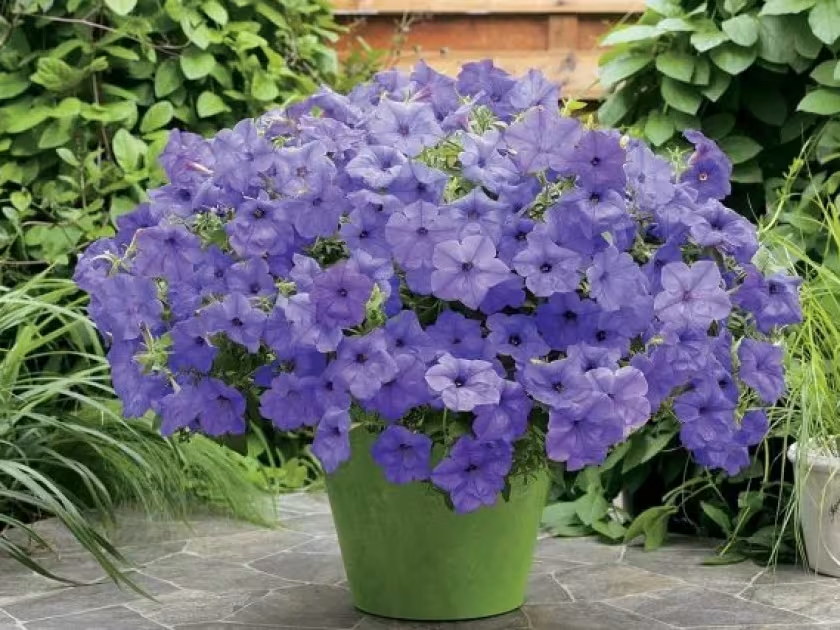
Description
Sowing dates
Sowing Petunia grandiflora seeds typically begins in late February or early March to ensure the plants are ready for the summer season. Due to the minute size of the seeds, they should be sown on the surface of the growing medium without covering.
The containers must be covered with plastic or glass to maintain high humidity levels during the germination phase. Adequate light exposure is strictly required, as these seeds will not germinate in the dark.
Optimal germination occurs at temperatures between 22 and 24 degrees Celsius. Seedlings generally emerge within 10 to 14 days, provided they receive sufficient artificial or natural light.
Pricking out the seedlings into individual pots is essential once two true leaves have developed. This process encourages the development of a robust root system and prevents overcrowding.
Hardening off the young plants for two weeks before transplanting into the open garden is a crucial step to increase their tolerance to environmental stressors and outdoor temperatures.
Growing requirements
As a member of the Solanaceae family, Petunia grandiflora thrives in full sun, requiring at least six hours of direct light daily to produce its characteristic large, vibrant flowers.
The soil should be fertile, well-draining, and slightly acidic. If the soil is heavy or prone to waterlogging, it must be amended with organic matter such as peat moss or compost to improve aeration.
Consistent watering is necessary, but care must be taken to apply water at the base of the plant to keep the delicate, large blooms dry and free from mechanical damage or spotting.
Regular fertilization with high-potassium and phosphorus fertilizers is vital throughout the growing season. This ensures continuous blooming and maintains the plant's health and structural integrity.
Pinching the growing tips is a common horticultural practice used to promote lateral branching, resulting in a fuller, more attractive plant with a higher density of flowers.
Main diseases and pests
Spider mites are a common threat, particularly in hot and dry conditions, often causing the foliage to appear speckled and eventually leading to significant plant decline if left untreated.
Powdery mildew can quickly affect the leaves under conditions of high humidity and poor air circulation. Implementing proper plant spacing is key to preventing this fungal infection.
Root rot is often the result of waterlogged soil or excessive watering, which compromises the roots' ability to absorb nutrients and leads to sudden wilting and death of the plant.
Thrips are persistent pests that feed on the petals and leaves, causing distortion and unsightly spots that reduce the ornamental value of the large flower heads.
Iron deficiency often leads to chlorosis, where the leaves turn yellow while the veins remain green, a condition that can be mitigated by correcting the soil pH or applying iron chelates.