
Petunia linoides
Petunia linoides
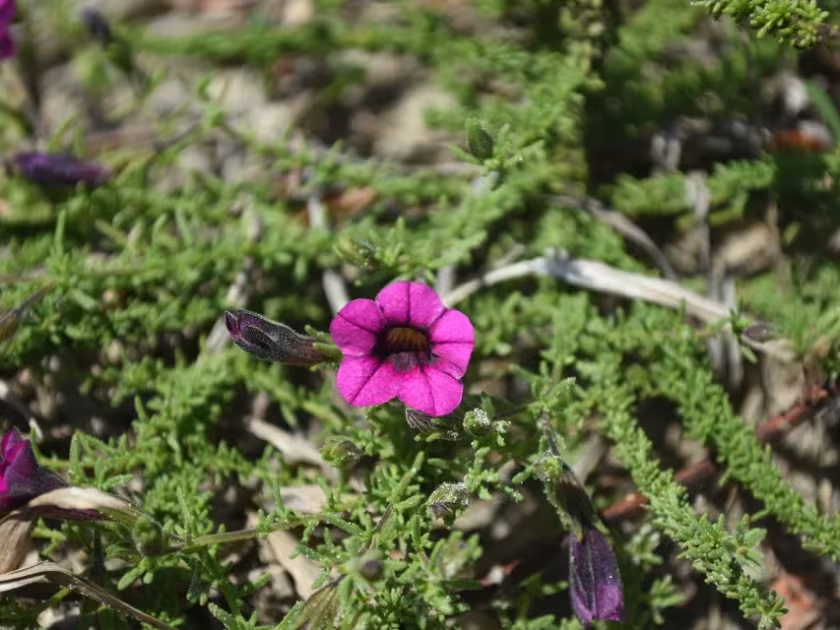
Description
Sowing dates
Sowing of Petunia linoides is typically initiated in late winter or early spring, approximately 10 to 12 weeks before the final frost date in the specific geographic region.
Due to the extremely small size of the seeds, they should be surface-sown on a fine-textured, sterile seed-starting mix and left uncovered to receive sufficient light for germination.
To ensure uniform emergence, keep the sowing medium consistently moist and maintain a stable ambient temperature between 22 and 24 degrees Celsius within a greenhouse environment.
Seedlings require pricking out into individual containers once the first set of true leaves develops to prevent overcrowding and ensure adequate airflow for development.
A hardening-off period is essential before transplanting, involving a gradual transition from indoor conditions to the outdoor environment to prevent transplant shock.
Growing requirements
Petunia linoides, a member of the Solanaceae family, demands a full-sun location to thrive and produce high-quality foliage and bloom displays throughout the season.
The cultivation site should feature well-draining, nutrient-rich soil with a pH ranging from slightly acidic to neutral to maximize nutrient uptake capacity.
Water management is critical; the plants require regular moisture but are highly susceptible to root rot if the soil becomes waterlogged for extended periods.
Nutrient supplementation should be applied consistently during the active growth phase, focusing on phosphorus and potassium to encourage robust flowering and structural integrity.
Regular maintenance, including the removal of spent flowers and pruning of elongated stems, is recommended to encourage branching and a more compact growth habit.
Main diseases and pests
Damping-off remains the primary threat during the initial stages of seedling development, primarily caused by excessive soil moisture and poor ventilation in the nursery.
Powdery mildew represents a significant risk for established plants, characterized by a white powdery coating on leaves, often triggered by high humidity and stagnant air.
Aphids and spider mites are the most common pests that infest the crop, causing leaf distortion and reduced plant vigor through sap extraction from the foliage.
Effective management strategies include the use of integrated pest management (IPM) practices, such as biological controls and targeted chemical treatments when thresholds are exceeded.
Maintaining proper spacing between plants is a fundamental preventive measure, as it increases airflow and reduces the probability of moisture-loving fungal pathogens spreading.