
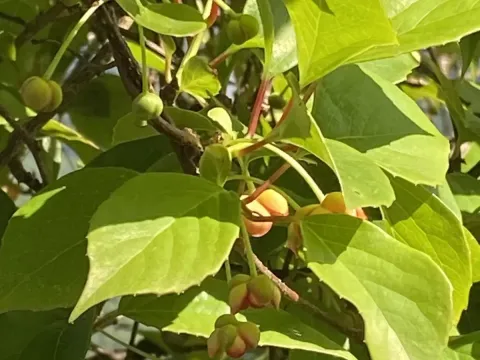
Schisandra chinensis
Schisandra
Seeds of Schisandra chinensis require cold stratification to break dormancy. Sowing should be carried out in late autumn for natural outdoor stratification, or seeds should be kept in a refrigerator at 0 to +5°C for 2–3 months before spring planting.
What the section contains
 Henry's Schisandra
Schisandra henryi
Henry's Schisandra
Schisandra henryi
 Red-flowered magnolia vine
Schisandra rubriflora
Schisandra elongata
Schisandra elongata
Red-flowered magnolia vine
Schisandra rubriflora
Schisandra elongata
Schisandra elongata
 Schisandra glabra
Schisandra glabra
Schisandra glabra
 Schisandra glaucescens
Schisandra glaucescens
Schisandra glaucescens
 Schisandra grandiflora
Schisandra grandiflora
Schisandra grandiflora
 Schisandra propinqua
Schisandra sphaerandra
Schisandra sphaerandra
Schisandra propinqua
Schisandra propinqua
Schisandra sphaerandra
Schisandra sphaerandra
Schisandra chinensis
The seeds are sown in light, nutrient-rich soil at a depth of about 1.5–2 cm. Proper moisture management is essential during the germination period, which can be slow and sporadic even under ideal conditions.
Seedlings develop very slowly during their first two years. During this stage, providing partial shade is crucial to prevent the tender leaves from scorching under direct sunlight.
For commercial production, vegetative propagation using green cuttings or root suckers is preferred. This method ensures genetic uniformity and results in earlier fruit production compared to plants grown from seeds.
Transplanting young vines to their permanent location should be done carefully to protect the fragile root system. Once established, the vines should be trained onto a sturdy trellis system for proper vertical growth.
Schisandra chinensis, belonging to the Schisandraceae family, is a hardy, deciduous climbing vine. It thrives in regions with moderate temperatures and high humidity, making it suitable for temperate forest-like microclimates.
The plant demands fertile, well-drained soil rich in organic matter. While it prefers moist conditions, it cannot tolerate waterlogging, which often leads to root rot and poor overall health of the vine.
A location with dappled sunlight is ideal. While the plant needs light for fruit production, it is sensitive to intense heat and direct, prolonged sun exposure, which can stress the leaves and stems.
Trellising is a mandatory agricultural practice for this species. Without proper vertical support, the vines sprawl on the ground, leading to reduced airflow, increased disease susceptibility, and lower yields.
Regular fertilization with organic compost or balanced NPK fertilizers is recommended during the growing season. Mulching the root zone helps retain soil moisture and suppresses weeds, which is vital for the young vine's development.
Fruit production generally begins after 5–7 years for seedlings, whereas vegetatively propagated plants may start fruiting in 3–4 years. Yield increases significantly as the vine matures and fills its trellis.
Pollination is a key factor in yield. Although the plant is monoecious, having multiple plants is recommended to ensure successful cross-pollination, which leads to a more uniform and abundant berry set.
Yields vary based on climatic conditions, training methods, and tree age. A mature, well-tended vine can produce several kilograms of berries, which are harvested in clusters once they reach full maturity.
The berries of Schisandra are widely recognized for their adaptogenic properties. They contain significant levels of lignans, such as schisandrin, which are highly valued in the pharmaceutical and food industries.
In intensive cultivation, yields can range from 2 to 5 tons per hectare. Success in maximizing yield relies on maintaining plant vigor through balanced nutrition and adequate irrigation during dry spells.
Fungal diseases, including leaf spot and powdery mildew, are the primary threats. These often develop in environments with poor air circulation or excessive leaf wetness, necessitating timely pruning and fungicide application.
Scale insects can pose a challenge by sucking sap from the stems, which weakens the vine. Integrated pest management, including the use of systemic insecticides, is effective in controlling these infestations.
Caterpillars and certain leaf-eating larvae may damage the foliage during the summer months. Monitoring the vines weekly during the active growth phase allows for early detection and manual removal of pests.
To prevent disease outbreaks, keeping the garden area clean and removing fallen leaves in autumn is crucial. This helps in reducing the overwintering population of pathogens and insect pests.
Ensuring the vines are spaced correctly on the trellis improves light penetration and air movement, which are the best natural defenses against most common threats to Schisandra chinensis.
Harvesting usually takes place from late August to September. The berries do not ripen all at once, so gardeners and farmers typically perform multiple passes to collect only the fully ripened, deep red clusters.
Post-harvest handling is critical because the fresh berries are highly perishable. They should be processed within 24 hours of picking, either by freezing, drying, or macerating them with sugar to prevent degradation.
Drying the berries is a common way to preserve them for herbal medicine. This should be done at low temperatures (around 50-60°C) to maintain the chemical profile of the active lignan compounds.
The juice derived from the berries is a popular product, often preserved through heat treatment and bottling. It is consumed as a potent tonic and health-promoting supplement in many traditional practices.
Care must be taken during harvest not to pull on the vine, as the branches are delicate. Using hand shears to cut the berry clusters ensures that the vine structure remains intact for the next season.