
Kadsura japonica
Kadsura japonica
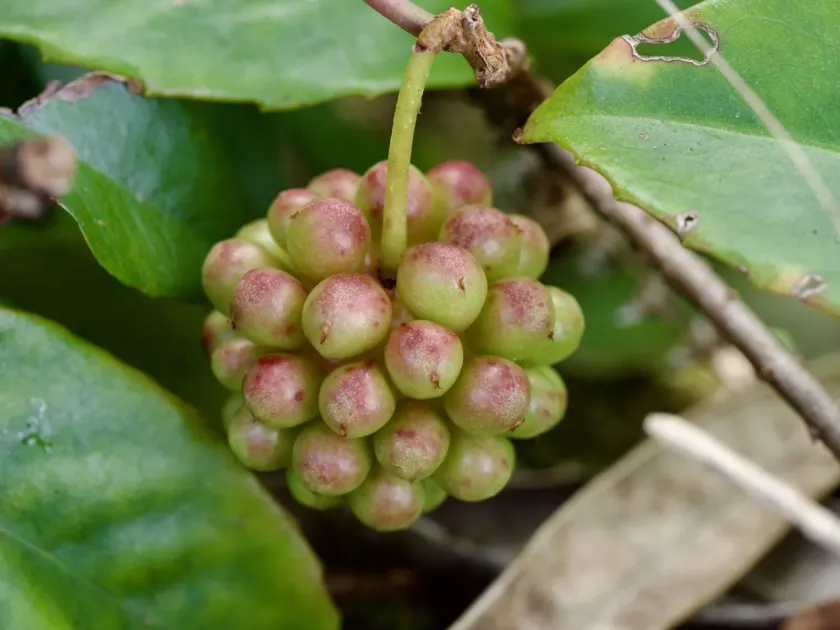
Description
Growing requirements
Kadsura japonica is an evergreen woody vine that belongs to the Schisandraceae family. Native to Japan, Korea, and China, this plant is well-regarded for its glossy foliage and ornamental berries.
Optimal growth requires soil that is rich in organic matter, well-draining, and slightly acidic. It thrives in positions that offer partial shade, avoiding the harsh direct sunlight that can scorch its leaves.
Climate requirements include a temperate or subtropical environment with consistent moisture levels. While the plant can tolerate light frosts, it requires protection in colder regions to preserve its evergreen structure.
Cultivation practices necessitate the use of sturdy trellises or walls, as the plant uses its twining stems to climb vertically. Consistent watering and mulching are essential to maintain root health and soil temperature.
Beyond its landscape value, Kadsura japonica is recognized for its chemical properties, with various parts of the plant being used in traditional pharmacological applications in its native range.
Main diseases and pests
The primary threats to Kadsura japonica are fungal diseases, particularly root rot, which occurs in waterlogged soil conditions. Good drainage is the most effective preventive measure.
Pests such as scale insects and spider mites may infest the plant, especially in glasshouse conditions or during periods of prolonged drought and low humidity.
Regular inspections of the undersides of the leaves are recommended to detect pest infestations early. Application of horticultural oils or organic soaps is generally effective for control.
Nutrient deficiencies, particularly a lack of magnesium or iron, can cause chlorosis in the foliage, which reduces the plant's overall vigor and attractiveness.
Pruning is a vital management task; removing weak, diseased, or overcrowded stems helps improve airflow and reduces the risk of moisture-related fungal infections.