
Red-flowered magnolia vine
Schisandra rubriflora
Description
Sowing dates
Propagation of Schisandra rubriflora is most commonly achieved through seeds, as well as vegetatively via cuttings or root suckers. Seeds require a mandatory stratification period of 2–3 months at temperatures between +1 and +5 degrees Celsius to improve germination rates.
Sowing seeds outdoors or in seed trays is recommended during late autumn or early spring after proper material preparation. The seeds should be planted at a depth of no more than 1–1.5 centimeters to ensure optimal emergence.
When sowing, it is crucial to provide a loose, nutrient-rich substrate mixed with peat and sand. Seedlings may emerge irregularly, making it vital to maintain consistent soil moisture and protect young plants from direct sunlight during their first year.
Vegetative propagation via cuttings is performed during the summer using green shoots treated with root-promoting hormones. This method allows for faster production of fruiting specimens compared to growing from seed.
Transplanting to a permanent location is best planned for the spring season, once the danger of late frost has passed, ensuring the plants establish their root systems before the onset of intense summer heat.
Growing requirements
Schisandra rubriflora is a woody vine belonging to the Schisandraceae family, native to the mountain forests of Western China. The plant prefers sites sheltered from strong winds, where the base of the stem remains in the shade while the crown receives sufficient light.
The crop is highly demanding regarding soil and air moisture. It does not tolerate waterlogging well, so on sites with high groundwater levels, the installation of a proper drainage layer consisting of crushed stone or broken bricks is essential.
Soils for cultivation should be fertile, light in texture, and have a slightly acidic or neutral pH level. An optimal mix includes leaf mold, sod soil, and sand in a 2:1:1 ratio.
For healthy development, the vine requires a vertical support system such as a trellis or netting. Without proper vine training, the plant loses its ornamental value, and fruit yields significantly decrease due to insufficient light exposure to the fruit clusters.
Temperature conditions should remain moderate; while adult plants are relatively winter-hardy, young shoots can be damaged by extreme cold, necessitating mulching of the root zone with organic matter for protection.
Yield
The economic value of Schisandra rubriflora stems from its ornamental characteristics and the biological content of its fruit. Unlike the more common Schisandra chinensis, this species is prized primarily for its spectacular bright red flowers arranged in clusters.
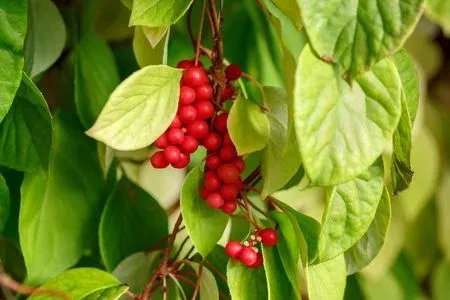
The fruit consists of juicy berries gathered in red, spike-like racemes. They contain organic acids, vitamins, and specific biologically active compounds characteristic of the Schisandraceae family.
Yield in garden cultivation depends on light exposure and management quality. Under favorable conditions, the vine begins to fruit 4–6 years after planting, showing stable annual fruit production provided cross-pollination occurs.
Harvesting is performed as the fruits reach full maturity and the clusters turn a deep red color. It is important to carefully snip the pedicels to avoid damaging the current year's young shoots, where next season's flower buds are formed.
Produce can be consumed fresh or processed into juices, tinctures, and dried products due to its tonic properties, although its primary role in European gardening remains vertical landscaping.
Main diseases and pests
Schisandra rubriflora is relatively resistant to diseases; however, poor agricultural management can lead to fungal infections. The most common issue is phyllosticta leaf spot, which requires treatment with copper-based fungicides.
Under conditions of high humidity and poor ventilation, the vine may suffer from powdery mildew. Preventive care includes proper formative pruning to ensure sufficient air circulation within the shrub canopy.
Among pests, leaf-eating insects and aphids pose the greatest threat, often damaging young foliage and growth tips. Regular inspection allows for the early detection of infestations and localized insecticide application.
The root system is sensitive to damage from soil-dwelling pests such as white grubs. In cases of significant soil infestation, the application of specialized soil-drench pesticides is recommended.
Adhering to crop rotation and avoiding the use of fresh, non-composted manure helps prevent root rot, which frequently occurs due to nitrogen excess and disruptions in soil pH balance.