
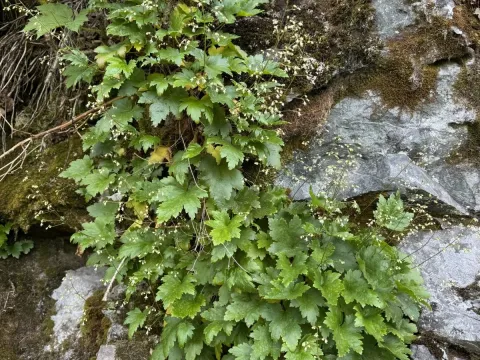
Smooth alumroot
Heuchera glabra
Sowing seeds of smooth alumroot is typically performed in early spring once the soil begins to warm up. Optimal timing falls between April and early May, allowing the plant to establish before the peak summer heat.
What the section contains
Smooth alumroot
Before sowing, it is essential to stratify the seeds at low temperatures for approximately 4 to 6 weeks. This process mimics natural winter conditions and significantly increases the germination rate.
Because the seeds are extremely small, they should be sown on the surface and pressed lightly into the substrate without covering them with soil. A greenhouse cover or plastic film is necessary to maintain high humidity.
Once seedlings have developed two sets of true leaves, they should be pricked out into individual pots. This practice provides sufficient space for the root system to strengthen before transplanting.
Transplanting to the open ground occurs when all danger of frost has passed. Planting density should ensure sufficient spacing for mature foliage to develop without crowding.
Heuchera glabra is a member of the Saxifragaceae family and thrives best in partial shade. Direct midday sunlight should be avoided to prevent leaf scorch and ensure the plant maintains its vibrant color.
The ideal soil is loose, fertile, and well-draining. Proper drainage is critical, as stagnant water around the root crown is highly likely to cause root rot and plant failure.
While the species is relatively cold-tolerant, it requires consistent moisture throughout the growing season. Mulching the area around the base helps retain soil humidity and keeps the roots cool.
Fertilization should be applied sparingly, focusing on balanced, low-nitrogen formulas during the active growing phase. Over-fertilization can lead to weak, elongated stems that lack the typical compact habit.
Winter preparation includes removing dead leaves and ensuring the root base is protected with organic mulch in colder zones. This helps regulate soil temperature and protects against rapid freeze-thaw cycles.
The primary threats to smooth alumroot include fungal infections such as powdery mildew and various types of root rot. These are often induced by poor air circulation or excessive moisture levels.
Pests such as leaf nematodes, vine weevils, and slugs can pose significant risks. These organisms can damage the plant tissues, reducing both the aesthetic appeal and the overall health of the specimen.
Effective management focuses on preventative measures, such as providing adequate space between plants and avoiding overhead irrigation. These steps significantly reduce the risk of humidity-related pathogens.
In case of pest infestations, specific insecticidal soaps or biological control agents should be utilized. Regular inspection is key to spotting early signs of damage and preventing large-scale spread.
Maintaining a clean garden bed by removing organic debris is essential for minimizing potential habitats for pests. Vigorous, well-watered plants are naturally more resilient to minor infestations.