
Sedum-like saxifrage
Saxifraga sedoides
Description
Growing requirements
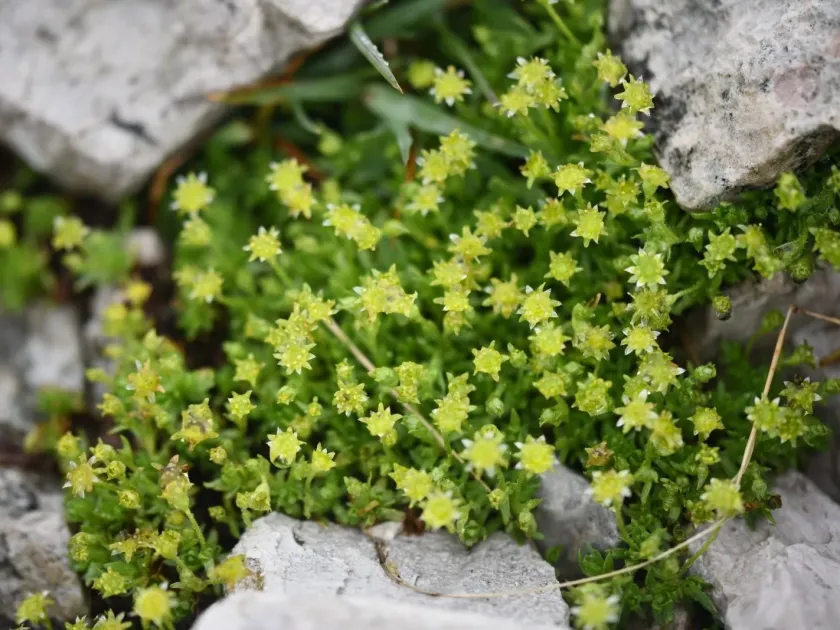
Sedum-like saxifrage (Saxifraga sedoides) is a hardy perennial herb belonging to the Saxifragaceae family. This species originates from alpine mountain ranges, where it thrives in rocky crevices and gravelly soils.
The cultural requirements for this plant focus on excellent drainage and exposure to sunlight. It is essential to replicate its natural habitat by using gritty, well-draining soil mixtures that prevent moisture from accumulating around the base.
In terms of climate, it is highly resilient, capable of surviving harsh winters without specific protection. It performs best in cool-temperate regions where it receives sufficient light throughout the growing season.
Watering should be managed carefully, as this species prefers drier conditions once established. Overwatering is the most common mistake in cultivation, often leading to the degradation of the delicate succulent-like foliage.
In gardening applications, Sedum-like saxifrage is prized as a ground cover in rockeries and alpine landscapes. Its slow-growing nature and ability to form dense, compact mats make it an excellent choice for stabilizing rocky slopes.
Main diseases and pests
Root rot is the primary threat to the longevity of Sedum-like saxifrage, usually triggered by poor drainage or over-irrigation. Proper site selection with a slope or gravel mulch is vital to avoid this issue.
While the plant is generally resistant to many pests, slugs and snails can occasionally cause damage to its fleshy leaves during wet seasons. Placing coarse materials around the plants acts as a physical barrier.
Fungal infections can appear during periods of high humidity and poor air circulation. To manage this, ensure that the plants are not overcrowded and that there is adequate spacing for airflow between clusters.
Spider mites might infest the plant during prolonged heatwaves. Regular inspections and, if necessary, the application of horticultural soap or specific acaricides can help manage small outbreaks effectively.
Maintaining the overall health of the plant through minimal intervention and avoiding excessive fertilizer is the best strategy for keeping it free from diseases and ensuring a long lifespan.