
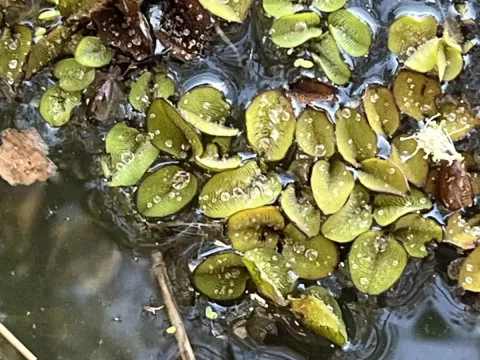
Salvinia
Salvinia
Salvinia is a genus of free-floating aquatic ferns within the Salviniaceae family. Unlike most vascular plants, Salvinia lacks true roots; instead, it uses specialized modified submerged leaves to absorb nutrients directly from the water column.
What the section contains
 Eared water moss
Salvinia auriculata
Eared water moss
Salvinia auriculata
 Floating watermoss
Salvinia natans
Floating watermoss
Salvinia natans
 Giant Salvinia
Salvinia oblongifolia
Giant Salvinia
Salvinia oblongifolia
 Hooded waterfern
Salvinia cucullata
Hooded waterfern
Salvinia cucullata
 Salvinia biloba
Salvinia hastata
Salvinia hastata
Salvinia biloba
Salvinia biloba
Salvinia hastata
Salvinia hastata
 Salvinia herzogii
Salvinia herzogii
Salvinia herzogii
 Salvinia minima
Salvinia minima
Salvinia minima
 Salvinia nymphellula
Salvinia sprucei
Salvinia sprucei
Salvinia nymphellula
Salvinia nymphellula
Salvinia sprucei
Salvinia sprucei
Salvinia
The plant thrives in calm, stagnant, or slow-moving water bodies with high light availability. Ideal temperatures for rapid vegetative growth range between 20°C and 28°C, while extreme fluctuations can stunt the development of the floating fronds.
As a nutrient-hungry plant, Salvinia prefers eutrophic environments where it acts as a bio-filter, efficiently removing excessive nitrogen and phosphorus. This makes it an essential component in managed wetland systems and aquaculture treatment ponds.
Proper water depth and surface area are critical for successful cultivation. The plant requires enough space to spread, as overcrowding can restrict light and oxygen diffusion, leading to poor health of the submerged portion.
In addition to water quality, Salvinia requires a specific mineral balance. While it is adaptable, it performs best in waters with moderate organic content, ensuring consistent growth rates that can be managed for harvest.
Salvinia is known for its incredibly high growth rate, often doubling its biomass in a matter of days under optimal tropical conditions. This rapid turnover makes it a highly productive source of organic matter for sustainable agriculture.
The harvested biomass is frequently used as a high-quality green manure. Once composted, the plant tissue releases essential nutrients back into the soil, significantly improving soil fertility and moisture retention in vegetable gardening.
In the animal husbandry sector, Salvinia is explored as a supplemental fodder. Given its protein profile and mineral density, it serves as a nutritious addition to the diet of certain waterfowl and farmed fish species.
Renewable energy production via anaerobic digestion is another viable use for Salvinia. Converting aquatic biomass into biogas provides a circular economic benefit for farms that possess large-scale water treatment infrastructure.
Harvesting efficiency is improved through mechanical skimming systems. By regulating the amount of floating cover, producers can maintain a constant yield while preventing the negative impacts of overgrowth on the aquatic environment.
The primary biotic threats to Salvinia include herbivorous insect larvae, such as those of the moth family Pyralidae, which can decimate large floating mats if left unchecked in agricultural systems.
Pathogenic fungi and bacterial rot are common in dense populations, especially when the water circulation is insufficient. These conditions promote the spread of decay, which can quickly turn a healthy population into an environmental burden.
Invasive competition from other aquatic species, such as duckweed or water lettuce, can significantly reduce the dominance of Salvinia in its habitat. These competing plants often grow at similar rates, leading to intense resource competition.
Chemical stress from industrial pollutants, heavy metals, and herbicide runoff can cause chlorosis and necrosis in Salvinia fronds. While the plant is a natural phytoremediator, excessive toxicity levels can lead to total colony collapse.
Management of these threats requires an integrated approach, focusing on maintaining water quality and implementing mechanical harvesting as a way to refresh the colony density and eliminate infected plant material.