
Salvinia biloba
Salvinia biloba
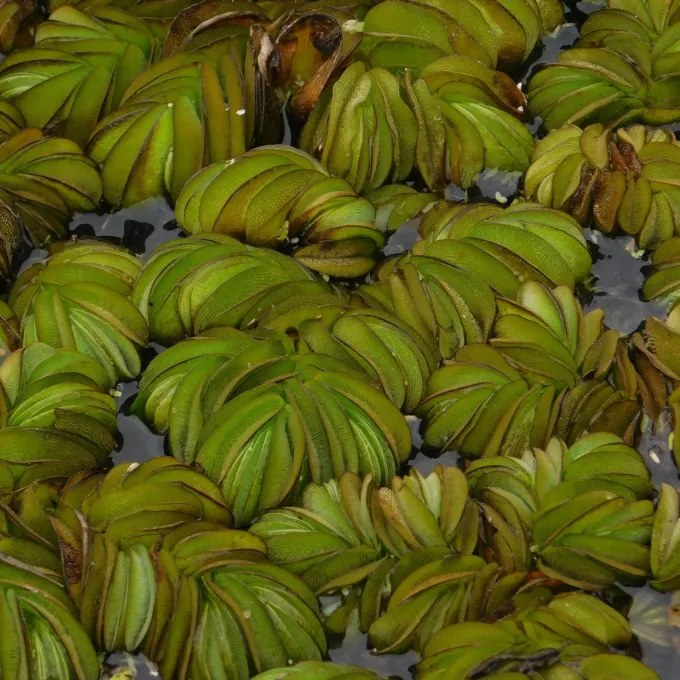
Description
Growing requirements
Salvinia biloba is a floating aquatic fern belonging to the Salviniaceae family. It is characterized by the absence of true roots, replaced by highly modified submerged leaves that absorb nutrients directly from the water column.
Native to tropical and subtropical regions of South America, specifically Brazil and Argentina, this plant thrives in warm, calm waters. It requires abundant sunlight for photosynthesis and efficient growth, making it an ideal candidate for tropical freshwater systems.
The optimal temperature range for Salvinia biloba growth is between 22 and 28 degrees Celsius. Exposure to temperatures below 15 degrees Celsius significantly retards growth and can lead to tissue damage or complete plant death in non-acclimatized conditions.
Regarding water quality, the species prefers nutrient-rich environments, especially those with high levels of nitrogen and phosphorus. Its rapid vegetative reproduction allows it to cover large surface areas quickly when supplied with sufficient nutrients.
Proper water circulation and a stable pH level are crucial for the health of the fronds. In controlled environments, it is essential to minimize wind impact, which can mechanically damage the delicate floating leaves and disrupt the stability of the plant colony.
Main diseases and pests
The primary threat to Salvinia biloba is extreme temperature fluctuation, particularly frost, as the species is highly sensitive to cold. In non-tropical climates, it must be grown in greenhouses or indoor controlled systems to survive.
Fungal infections often occur when plant density becomes too high, leading to reduced air circulation around the foliage. This often manifests as decay on the leaf margins, which can spread rapidly throughout the colony if not managed by thinning.
Pests such as snails and certain insect larvae can significantly feed on the soft tissue of the fronds. Integrated pest management, focusing on biological control methods, is preferred to avoid chemical contamination of the aquatic environment.
Competition with aggressive algae species represents a major challenge, as algae can block sunlight and reduce nutrient availability for the fern. Managing the balance of the ecosystem is key to maintaining a healthy population of Salvinia.
Pollution caused by pesticides, herbicides, or heavy metals poses a severe risk. As a sensitive bioindicator, Salvinia biloba reacts negatively to water contaminants, often showing yellowing, chlorosis, and stunted development when exposed to chemicals.
Harvesting
Harvesting is performed through mechanical removal of the biomass using skimmers or nets. This method allows farmers to clear the water surface effectively, ensuring that the plant density does not negatively impact the oxygen levels within the water body.
Routine harvesting is recommended to manage the growth rate and prevent the fern from completely covering the surface, which would otherwise lead to anaerobic conditions beneath the water layer due to the lack of light penetration.
The collected biomass serves as an excellent organic material for composting. It is rich in minerals and nitrogen, making it a valuable resource for enhancing soil quality in greenhouse horticulture and sustainable vegetable production.
Post-harvest management requires maintaining high humidity levels to prevent the rapid dehydration of the harvested material. Proper storage techniques ensure that the nutrient content remains intact for its eventual use as a soil amendment.
Farmers often use a rotational harvest system to ensure constant productivity. By dividing the water surface into distinct zones, they can harvest sections of the colony sequentially, allowing the remaining plants to propagate and fill the gaps.