
Eared water moss
Salvinia auriculata
Description
Growing requirements
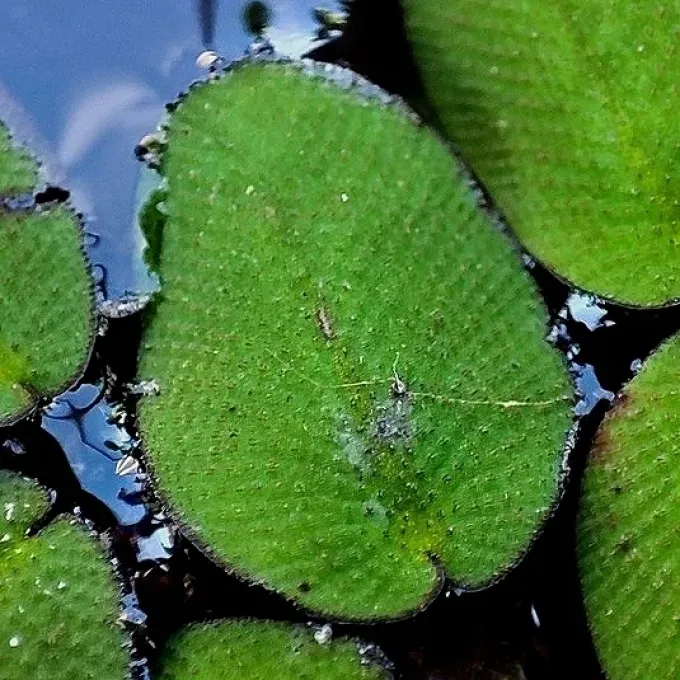
Salvinia auriculata is a floating aquatic fern belonging to the Salviniaceae family, known for its unique fronds covered in specialized trichomes that ensure water repellency.
Originating from the tropical regions of Central and South America, this species thrives in stagnant or slow-moving water bodies rich in nutrients.
The plant requires warm water temperatures, ideally between 20°C and 28°C, and cannot tolerate freezing conditions, which limits its growth in temperate zones.
Adequate lighting is essential for the plant to maintain its structural integrity and rapid growth rates; insufficient light leads to quick biomass reduction.
In agricultural practice, this plant is frequently studied for its high capacity in phytoremediation, specifically for extracting heavy metals and pollutants from water systems.
Main diseases and pests
The primary concern for growers is the rapid spread of the plant, which can easily become invasive if introduced into uncontrolled natural aquatic ecosystems.
Fungal infections can develop on the upper surface of the leaves if the plant is kept in conditions with poor air circulation or high humidity and stagnant air.
Certain species of aquatic insects and larvae are known to graze on the leaves, leading to stunted development and eventual loss of the plant's buoyancy.
Algal blooms compete for essential nutrients and sunlight, which can significantly inhibit the growth of Salvinia colonies if the nutrient balance is not monitored.
Accumulation of toxic salts in the water can lead to chlorosis and the destruction of the leaf surface morphology, preventing the plant from floating effectively.