
Hooded waterfern
Salvinia cucullata
Description
Growing requirements
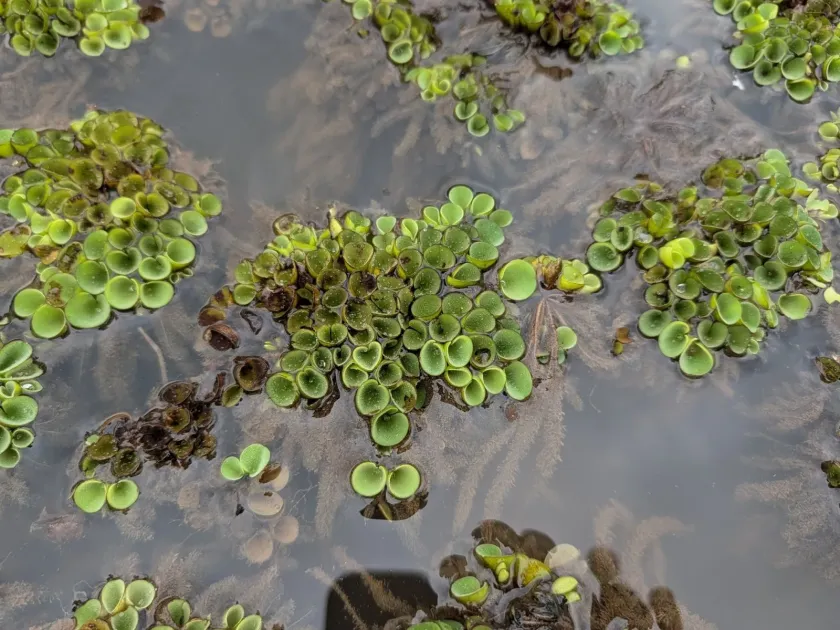
Salvinia cucullata, commonly known as the hooded waterfern, belongs to the family Salviniaceae. This floating aquatic plant is recognized by its distinctively curved leaves that form hood-like structures, which are densely covered in specialized hairs that repel water.
The plant originates from the tropical regions of Southeast Asia. It thrives in stagnant or slow-moving water bodies with high nutrient concentrations. It is a thermophilic species, requiring water temperatures between +22°C and +28°C to maintain healthy growth and propagation rates.
Successful cultivation depends heavily on adequate lighting. Salvinia cucullata requires high levels of indirect light to thrive; insufficient lighting results in the stunted growth of the floating pads and a loss of the characteristic structural morphology that makes it a desirable species.
Regarding agricultural application, this plant is valued for its capacity to improve water quality through phytoremediation. It acts as an efficient nutrient sink, pulling nitrates and phosphates from the water column, which makes it useful in integrated aquaculture systems.
Maintenance techniques for Salvinia include regular harvesting to manage its rapid spread. Without active population control, the plant can create a dense mat on the water surface, which significantly inhibits gas exchange and reduces light penetration for submerged vegetation.
Main diseases and pests
Pests such as snails and certain aquatic caterpillars are known to feed on the foliage of Salvinia. Furthermore, the species is susceptible to various fungal pathogens that can manifest if the plants are crowded together, especially in environments with poor air circulation above the water surface.