
Salvinia minima
Salvinia minima
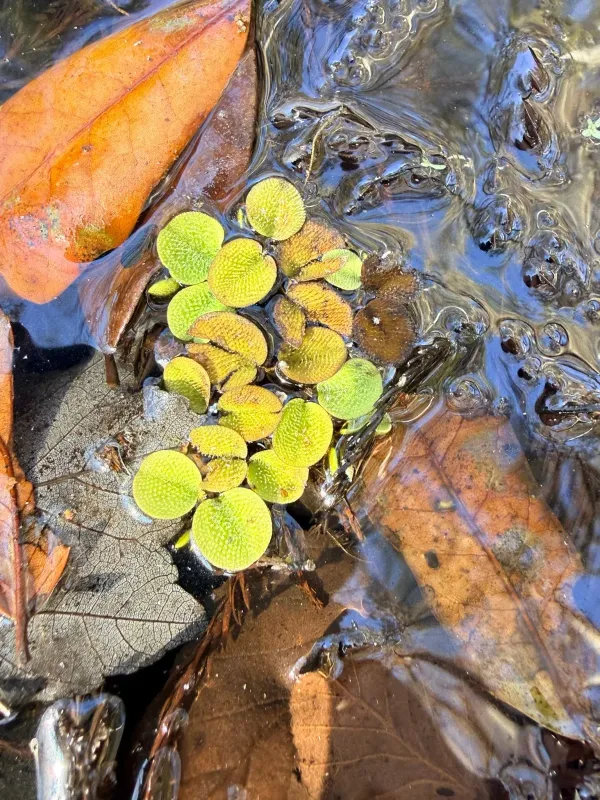
Description
Growing requirements
Salvinia minima, commonly known as common salvinia, is a small, free-floating aquatic fern belonging to the family Salviniaceae. Native to the tropical and subtropical regions of the Americas, this species has become a subject of interest in aquatic agronomy and ecology.
The plant thrives in warm, still or slow-moving water environments. It requires significant exposure to sunlight to maintain its rapid growth rate, although it can tolerate partial shade in areas with extremely high solar intensity to prevent thermal stress on the leaves.
Morphologically, the plant consists of a horizontal stem bearing three leaves per node. Two leaves float on the surface and are covered in specialized water-repellent hairs, while the third leaf is submerged, acting as a root system to absorb water and dissolved nutrients.
Regarding water quality, Salvinia minima prefers nutrient-rich conditions, particularly those high in nitrogen and phosphorus. It does not require soil substrate, making it an ideal candidate for hydroponic-based waste treatment systems where nutrients are supplied via the water column.
Agronomic management requires careful control of population density. Due to its rapid asexual reproduction, the plant can quickly cover the surface of a pond, which restricts light and gas exchange. Regular harvesting is essential to maintain a healthy balance in the aquatic environment.
Yield
The primary agricultural and environmental utility of Salvinia minima lies in phytoremediation. The plant is highly effective at absorbing excessive nitrates and phosphates from agricultural runoff, which helps prevent harmful algal blooms in downstream water bodies.
In aquaculture, it serves as a functional cover for fry and small fish, providing protection from predators and offering a substrate for the development of beneficial microorganisms. This micro-ecosystem supports the overall health and productivity of farmed aquatic species.
Biomass production is highly efficient under optimal conditions. In warm climates, the plant can double its coverage area within a few days. This high turnover allows for frequent harvesting, which can be processed into organic fertilizer or mulch.
Sustainable use of the plant requires containment. Because of its potential to outcompete native vegetation, it must be grown in controlled, closed-loop systems to prevent accidental release into natural waterways, where it can become a major invasive pest.
Ongoing research explores the potential of using dried Salvinia biomass as a component in animal feed or biofuel, though such applications require rigorous processing to ensure the removal of any potential contaminants absorbed during the growth phase.
Main diseases and pests
Temperature sensitivity is the primary limitation for this culture. Salvinia minima is highly vulnerable to frost and cold-water temperatures. Exposure to freezing conditions causes immediate cell damage, often resulting in the total loss of the floating biomass.
Nutrient imbalances, particularly a deficiency in iron or other micronutrients, can lead to chlorosis. This condition causes the leaves to yellow and become brittle, significantly inhibiting the plant's ability to undergo photosynthesis and expand its colonies.
Pests such as aquatic snails and certain insect larvae can damage the submerged structures of the plant. While limited damage is usually tolerable, severe infestations can stunt growth and provide entry points for secondary fungal infections that rot the stem.
Competition from more aggressive aquatic weeds, including other floating species like duckweed or water hyacinth, can threaten a Salvinia colony. If the water surface becomes overcrowded, the plants may become stunted due to lack of space and light.
Water toxicity is a critical threat. Because the plant absorbs nutrients directly through its foliage, it is extremely sensitive to herbicides, heavy metals, and oil-based pollutants, all of which can lead to rapid colony collapse and death.