
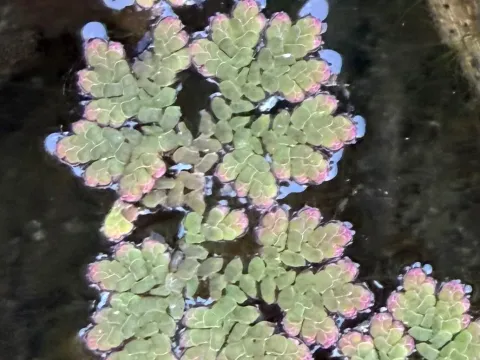
Azolla
Azolla Lam.
Azolla (Azolla Lam.) is a genus of seven species of aquatic ferns in the family Salviniaceae. It is globally recognized for its unique symbiotic relationship with the cyanobacterium Anabaena azollae, which lives in the leaf cavities and fixes atmospheric nitrogen.
What the section contains

Azolla
Botanically, it consists of a short, branched, floating stem with small, imbricated, scale-like leaves. Its roots hang in the water, absorbing nutrients directly from the environment. The plant reproduces rapidly through vegetative fragmentation, quickly covering the water surface.
For optimal growth, Azolla requires a climate with temperatures ranging from 20 to 30 degrees Celsius. It thrives in still or slow-moving water bodies, such as ponds, ditches, or flooded rice paddies, which provide the stability necessary for colony formation.
Water quality parameters are essential, specifically the presence of phosphorus, which limits the growth rate of the plant. Furthermore, Azolla prefers partial shade, as intense direct sunlight can trigger physiological stress and damage the symbiotic bacteria.
The agricultural importance of Azolla lies in its ability to serve as a sustainable alternative to chemical nitrogen fertilizers. By integrating it into rice farming systems, farmers can significantly increase yields while improving the long-term fertility of the soil.
Under ideal conditions, Azolla production can be extremely high. It is capable of doubling its biomass within 3 to 5 days, leading to potential annual yields of tens of tonnes of fresh weight per hectare depending on the management intensity.
In terms of agricultural utility, Azolla is a high-protein feed source for livestock, including poultry, pigs, and fish. It contains significant amounts of essential amino acids, vitamins, and minerals, making it a highly nutritious supplement for various animal diets.
In aquaculture and environmental management, the plant is used for bioremediation. It effectively removes excess nitrogen and phosphorus from wastewater, thereby preventing eutrophication and improving the health of aquatic ecosystems.
Harvesting is typically performed by skimming the surface of the water using nets or mechanical harvesters. The gathered biomass can be applied directly as a soil conditioner, composted, or processed into dried meal for use as a shelf-stable feed ingredient.
Recent research also highlights Azolla's potential in bioenergy sectors, where its high growth rate is utilized for biomass conversion and biogas production, offering a renewable energy solution for small-scale farms.
Pest management is a critical aspect of Azolla cultivation. Various insect larvae, particularly from the order Lepidoptera, can cause devastating damage to the floating mats. Frequent inspection and manual removal are common preventive measures.
Fungal diseases are a significant risk factor, especially when the plant density becomes too high, causing poor air circulation and humidity spikes within the colony. Thinning the population periodically helps maintain plant vigor and hygiene.
The chemical composition of the water significantly impacts plant survival. High levels of salinity, heavy metals, or extreme pH levels can inhibit the symbiotic bacteria, leading to yellowing, nitrogen deficiency, and eventual death of the fern.
Invasive weeds and algae often compete for space and nutrients. Maintaining an environment favorable to Azolla, including proper water depth and temperature management, is essential to outcompete unwanted flora in the cultivation area.
Cold stress is a major constraint in non-tropical regions. As a warm-climate plant, Azolla is highly sensitive to frost. Farmers must protect "seed" cultures in greenhouse tanks during winter months to ensure they can be re-seeded in the spring.