
Giant Salvinia
Salvinia oblongifolia
Description
Growing requirements
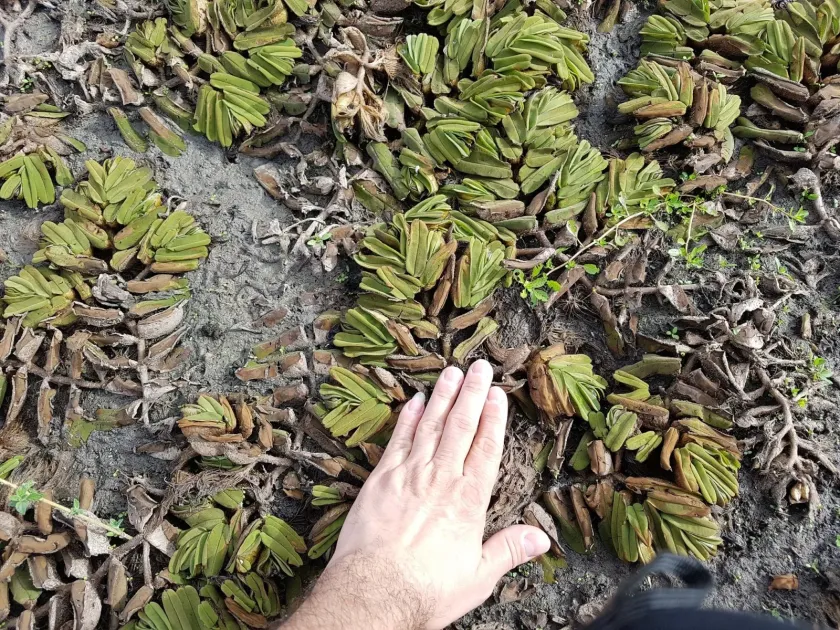
Salvinia oblongifolia is a perennial floating aquatic fern belonging to the Salviniaceae family. Unlike other smaller species in the genus, this plant is characterized by its larger, elongated leaves and a robust growth habit that creates dense floating mats on water surfaces.
Originating from the tropical regions of South America, this culture thrives in slow-moving or stagnant water bodies. In its natural habitat, it occupies nutrient-rich environments where it efficiently utilizes dissolved organic matter to fuel its rapid expansion.
Environmental requirements for successful cultivation include stable tropical temperatures, ideally between 22 and 28 degrees Celsius. High intensity of ambient light is essential for maintaining optimal photosynthetic rates and stimulating the formation of new vegetative branches.
Water quality parameters should ideally be maintained in a pH range of 6.0 to 7.5. The plant is sensitive to chemical additives, particularly chlorine and certain heavy metals; therefore, using purified or aged water is a fundamental requirement for greenhouse or aquarium setups.
Agricultural management involves monitoring the density of the floating mats. If the plant covers the entire surface, it can impede gas exchange, leading to hypoxia. Regular mechanical thinning is necessary to balance the ecosystem and ensure the continued health of the population.
Harvesting
The primary economic use of Salvinia oblongifolia is in the aquarium trade and for ornamental pond landscaping. It is highly valued for its aesthetic appeal and its capacity to act as a natural biofilter by absorbing nitrates and phosphates from the water column.
Harvesting involves the removal of excessive biomass, which is performed throughout the growing season. The plant exhibits high regenerative capacity, allowing for frequent harvesting cycles without exhausting the mother colonies if sufficient nutrients are present.
The collected biomass is frequently utilized in composting or as organic mulch for greenhouse crops due to its high nutrient density. Proper drying is recommended prior to its application as an amendment to prevent waterlogging of the soil media.
Manual collection using fine-mesh nets is the standard method for managing the plant. Because of its invasive potential in certain climates, all harvest residues must be disposed of carefully to prevent the spread of the fern into local waterways.
Sustainable production systems often integrate Salvinia as part of a recirculating aquaculture system. By managing its growth effectively, farmers can utilize the fern as a primary tool for water purification, combining environmental stewardship with productive biomass generation.