
Salvinia herzogii
Salvinia herzogii
Description
Growing requirements
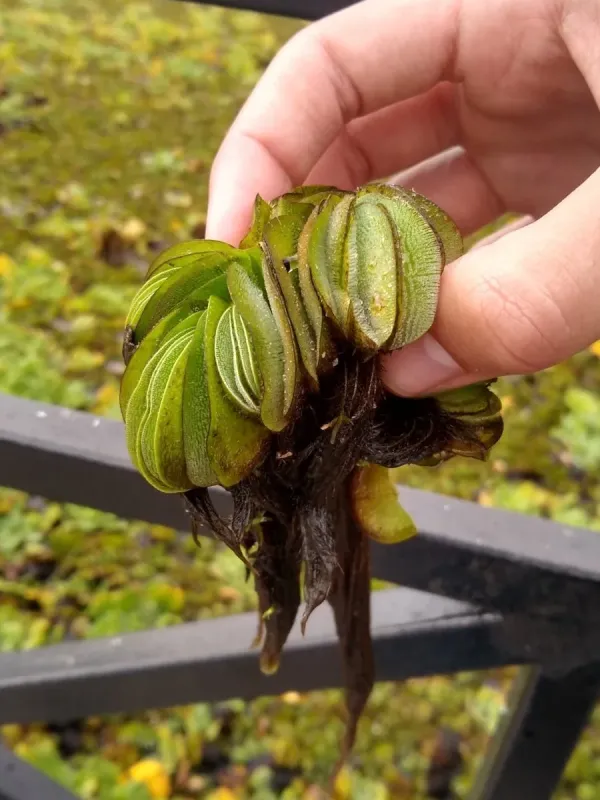
Salvinia herzogii is a distinct species of aquatic floating fern belonging to the Salviniaceae family. It is widely recognized for its unique structure, featuring delicate, hairy leaves that provide excellent buoyancy and a specialized submerged root system that aids in nutrient absorption.
Native to the subtropical regions of South America, this plant thrives in warm, humid climates. In agricultural and horticultural settings, it requires consistently high ambient temperatures and is highly sensitive to frost, making it unsuitable for outdoor cultivation in temperate zones.
The plant requires moderate to bright indirect light to maintain its vibrant green coloration and dense growth habit. Excessive direct sunlight can cause leaf dehydration, while insufficient light levels lead to etiolation and the thinning of the floating colonies.
Cultivation parameters must prioritize water quality, specifically favoring soft to medium-hard water with a slightly acidic to neutral pH. It is crucial to maintain stagnant or very slow-moving water, as strong currents can damage the delicate floating fronds and inhibit colony expansion.
In terms of хозяйственное (economic) utilization, Salvinia herzogii is primarily valued in ornamental aquaculture and bioremediation. Its rapid growth cycle allows it to effectively extract excess nutrients from wastewater, contributing to improved water clarity in pond and aquarium systems.
Main diseases and pests
The most common disease affecting Salvinia herzogii is fungal rot, which typically occurs in environments with poor air circulation or excessive humidity trapped near the leaf surfaces. Providing adequate ventilation over the water surface is essential for preventing these outbreaks.
Pest pressure is usually associated with aphids or spider mites, which can infest the foliage if the plant is grown in outdoor tanks during the summer months. Gentle mechanical removal or introducing natural predators is preferred over chemical interventions, which often prove toxic to aquatic life.
Nutrient toxicity, particularly from high levels of heavy metals or strong chlorine, can cause immediate leaf necrosis. Regular water testing is necessary to ensure the environment remains safe for the plant’s sensitive root structures and metabolic processes.
Competition from algae remains a significant challenge, as invasive species can easily outcompete Salvinia for light and nutrients. Managing the nutrient input to ensure a favorable balance for the ferns is a vital aspect of routine maintenance.
Finally, improper lighting cycles can weaken the plant's natural defense mechanisms, making it susceptible to opportunistic bacterial infections. Maintaining a consistent 10-12 hour photoperiod is recommended to ensure robust health and continuous biomass production.