
Floating watermoss
Salvinia natans
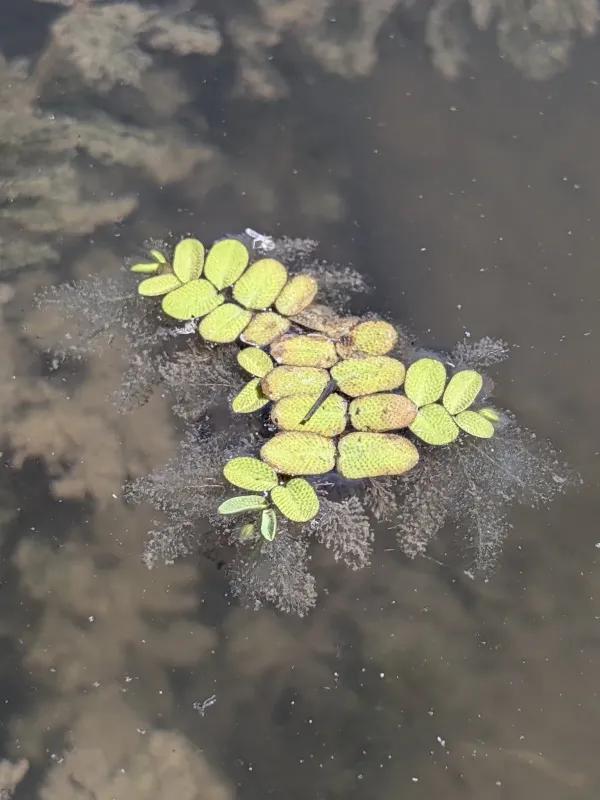
Description
Growing requirements
Salvinia natans, commonly known as floating watermoss, is a unique annual aquatic fern belonging to the Salviniaceae family, characterized by its floating habit.
It thrives in still or slow-moving freshwater environments where there is an abundance of dissolved nutrients and protection from turbulent water flow.
The plant requires high levels of solar radiation and warm water temperatures, typically ranging between 20°C and 28°C for optimal growth rates.
Floating watermoss is highly sensitive to water chemistry and can serve as a biological indicator of healthy, non-polluted aquatic ecosystems.
During the dormant winter phase, the vegetative plant decomposes, while resilient spore cases survive on the bottom of the water body to initiate the next cycle.
Yield
The primary agricultural application of this species involves its use in phytoremediation to extract excess nutrients from wastewater treatment systems.
It is valued in aquaculture for providing natural shade and shelter for young fish species, while also competing with invasive algae for sunlight.
The harvested biomass is rich in nitrogen, making it an excellent candidate for composting and conversion into organic soil amendments for agriculture.
Floating watermoss can rapidly cover the surface of a pond, effectively reducing water evaporation and preventing the growth of undesired underwater vegetation.
Managing the plant density is crucial, as excessive growth can lead to oxygen depletion if a large amount of biomass decays simultaneously.
Main diseases and pests
Pollution from heavy metals or industrial runoff is a major threat that quickly degrades the structural integrity of the floating leaves.
Various aquatic insect larvae and snails can cause significant damage to the foliage, especially in confined artificial environments or greenhouse settings.
Fungal pathogens may emerge in stagnant conditions with poor airflow, causing localized rotting and decay of the plant colony.
Mechanical damage caused by extreme weather conditions, such as heavy rain or wind-driven waves, can fragment the plants and hinder their expansion.
Invasive weed encroachment represents a constant biological pressure that requires regular monitoring to ensure the health of the Salvinia crop.