
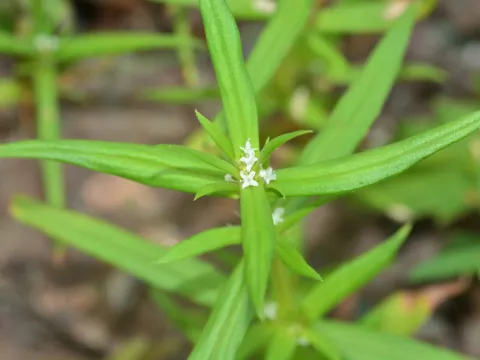
Spermacoce pusilla
Spermacoce pusilla
Spermacoce pusilla is an annual herbaceous plant belonging to the Rubiaceae family, commonly found in tropical and subtropical regions across the globe.
What the section contains
Spermacoce pusilla
The plant reproduces primarily through seeds, which exhibit high viability and rapid germination under adequate moisture conditions.
In a cultivation setting, sowing should be timed with the onset of the rainy season to capitalize on naturally high levels of ambient humidity.
Seeds are small and should be sown near the surface to ensure they receive sufficient light, which is an essential trigger for their germination.
As an adaptable species, it can quickly establish populations in disturbed soils, provided that the initial growth requirements are met.
This crop thrives in well-drained, nutrient-rich soils, particularly those with a sandy or loamy texture that allows for optimal root development.
Full sun exposure is a critical requirement, as the plant struggles to maintain vigor in shaded environments or under dense forest canopies.
Optimal growth occurs at temperatures between 22 and 30 degrees Celsius, which reflects its natural adaptation to tropical climatic patterns.
While the species requires consistent moisture for its vegetative phase, soil saturation must be avoided to prevent root rot and systemic decay.
Proper nutrient management, especially regarding nitrogen, is vital to support the plant's structural development and high metabolic rate.
Fungal pathogens represent the primary threat to the crop, especially in areas with high relative humidity and poor air circulation.
Insect pests, such as aphids and leafhoppers, frequently cause damage by feeding on foliage, which can lead to reduced photosynthesis.
Root-knot nematodes are significant subterranean threats that can severely compromise the plant's nutrient uptake and overall development.
Weed competition in the early growth stages can be detrimental, as the plant may be outpaced by faster-growing local vegetation.
Strategic management of threats involves integrated pest control measures and the maintenance of sanitary conditions to prevent pathogen spread.