
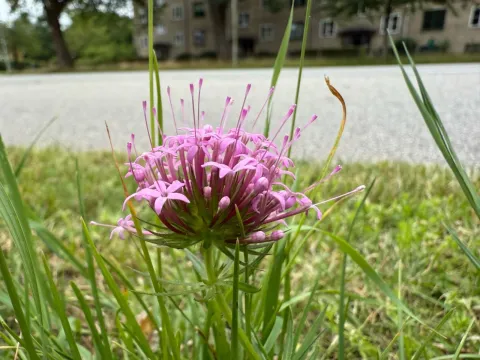
Caucasian crosswort
Phuopsis stylosa
Caucasian crosswort, scientifically known as Phuopsis stylosa, belongs to the Rubiaceae family. This perennial is native to the Caucasus region and northern Iran, where it thrives in rocky mountainous environments and stony slopes.
What the section contains
Caucasian crosswort
The plant is characterized by its prostrate growth habit, forming dense mats of fine stems with whorled, narrow leaves. It typically grows to a height of about 15 to 20 centimeters, making it an excellent ground-covering candidate for gardens.
In terms of cultivation, it prefers sunny or partially shaded locations with well-drained, average garden soil. It is particularly important to avoid sites prone to waterlogging, as the root system is highly susceptible to rot in damp, heavy conditions.
The plant is known for its hardiness and drought tolerance once established. It displays stunning pink, ball-shaped clusters of flowers during early to mid-summer, releasing a distinct, pleasant fragrance that adds value to any rockery or border.
Maintenance is relatively simple, requiring occasional watering during prolonged dry spells and moderate protection in areas with harsh, frost-prone winters. Its ability to spread makes it a low-maintenance choice for covering larger bare ground areas.
The primary concern for the health of Caucasian crosswort is the prevention of root-related diseases caused by excess moisture. Proper drainage is the most effective preventative measure against rot in this species.
Slugs and snails can pose a threat, especially during the cool and wet spring season, as they feed on the young, tender foliage. Using physical barriers such as gravel or grit around the base of the plant can significantly deter these pests.
While generally resistant to severe pest infestations, spider mites can occasionally affect the plant during hot, dry summer periods. Monitoring the foliage and maintaining adequate moisture levels helps keep these mites at bay.
Fungal diseases like leaf spot may appear if air circulation is poor, particularly in overcrowded plantings. Pruning and thinning out dead or congested stems periodically is recommended to ensure the plant remains healthy and disease-free.
Avoiding excessive nitrogen fertilizers is important for maintaining the plant's natural vigor and resistance. A balanced soil nutrient level ensures compact growth, which is essential for preserving the ornamental quality of the mats.