
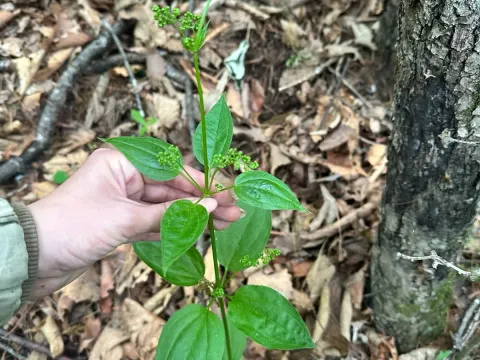
Chinese madder
Rubia chinensis
Cultivation of Chinese madder typically begins in early spring once the soil temperature consistently reaches 10–12°C. While direct seeding is possible in warmer regions, starting with seedlings is often preferred to ensure uniform stand establishment.
What the section contains
Chinese madder
Proper site preparation is essential, as the crop requires well-drained, fertile soil. Seeds should be sown at a shallow depth of about 2 cm, with row spacing maintained between 45–60 cm to allow for future mechanical maintenance.
Seed stratification is recommended to break dormancy and improve overall germination rates. Proper spacing is critical not only for individual plant development but also to reduce competition for nutrients and water in the early growth stages.
Late autumn sowing is an alternative strategy, allowing the seeds to undergo natural overwintering. This often leads to earlier germination in the spring and stronger root system development for the upcoming season.
Crop rotation is vital for long-term health; cereals and fallow fields are considered the best precursors for madder, preventing the build-up of soil-borne pathogens and ensuring optimal nutrient levels.
Chinese madder, a member of the Rubiaceae family, is a perennial plant that thrives in temperate climates. It requires consistent moisture levels throughout the growing season but is intolerant of waterlogging.
The plant performs best in loose, well-drained soils with a neutral to slightly alkaline pH. Heavy clay soils can impede the expansion of rhizomes, which are the main commercial product of the crop.
Exposure to full sunlight is essential for optimal growth and the synthesis of secondary metabolites. While the plant is hardy, it benefits from protection against extreme winter frosts if the planting site is particularly exposed.
Nutrient management should focus on balanced NPK ratios, with a slight emphasis on phosphorus and potassium during the second year to support root development. Organic amendments can be incorporated during initial soil preparation.
Regular irrigation is necessary during dry spells, particularly for young plants. Once established, the extensive root system provides some drought tolerance, though yields are highest when moisture stress is minimized.
Commercial harvest for Chinese madder is typically carried out on 3 to 4-year-old stands. This period allows the roots to accumulate high concentrations of anthraquinones, the compounds prized for medicinal use.
The yield of dried root ranges between 15 and 25 centners per hectare under intensive farming systems. Higher yields are achieved through meticulous weed control and optimal soil structure maintenance.
Quality assessment of the harvest depends on root diameter, cleanliness, and the presence of specific active compounds. Mechanical digging tools are utilized to lift the deep root systems without causing significant damage.
After the harvest, roots must be washed immediately to remove soil particles and debris. Efficient processing ensures the raw material remains free from contamination, meeting the standards required by the pharmaceutical industry.
Chinese madder roots serve as a valuable source of bioactive ingredients. Beyond pharmacology, the plant is historically significant in the textile industry as a natural dye source, though modern focus is primarily medicinal.
Chinese madder is relatively resistant to pests, but it remains susceptible to various fungal diseases, such as root rot and powdery mildew, especially in regions with high humidity and poor drainage.
Soil-dwelling insects, such as wireworms, can pose a threat by damaging the roots. Integrated pest management strategies, including the use of biological control agents and crop rotation, are effective in mitigating these risks.
Overcrowded plantings increase the risk of disease spread, making proper row spacing and thinning essential practices. Good aeration within the field reduces the occurrence of leaf pathogens during the summer months.
Farmers should conduct regular field inspections to identify early signs of fungal infection or insect activity. Early detection allows for targeted treatments that protect the crop yield while minimizing chemical usage.
Sustainable agricultural practices, such as maintaining soil health and using organic fertilizers, improve the plant's natural resistance to environmental stress and pests throughout its multi-year growing cycle.
The harvest of Chinese madder is a major operation requiring heavy-duty equipment to extract deep-growing roots from the soil. This process is typically timed for late autumn or early spring before the new season starts.
During the dormant season, the plant allocates its energy to the root system, resulting in the highest concentration of desired compounds. This timing ensures both maximum yield and optimal product quality.
Care must be taken during the lifting process to minimize root breakage. Intact roots are not only easier to process but also possess better storage characteristics and higher market value.
Post-harvest processing involves washing the roots to remove all soil residues. Thorough cleaning is critical to prevent bacterial growth and to ensure the raw material meets industrial hygiene standards.
Final processing involves drying the roots in controlled-environment chambers. Keeping temperatures below 50°C prevents the degradation of heat-sensitive medicinal compounds, ensuring a shelf-stable and potent end product.