
Perrier Coffee
Coffea perrieri
Description
Growing requirements
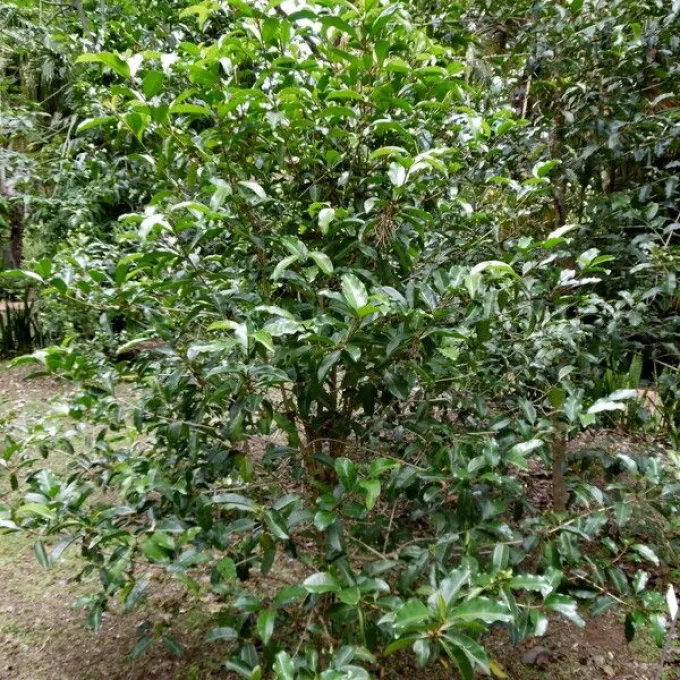
Perrier coffee (Coffea perrieri) is a unique and rare species of evergreen shrub or small tree belonging to the Rubiaceae family. Native exclusively to Madagascar, it is highly valued by botanists for its distinct biological traits and its status as a micro-endemic species.
This species naturally inhabits dry deciduous forests located in the northern regions of the island. It has developed a strong preference for limestone-derived soils, which differentiates it from many other coffee species that typically favor volcanic or acidic soil profiles.
Climatic requirements for Coffea perrieri include consistent tropical temperatures and a distinct seasonality regarding moisture levels. The plant thrives under the partial shade provided by a forest canopy, which protects it from the intense equatorial sun.
Proper soil management for this species necessitates excellent drainage and high mineral content. Given its rare nature, specialized cultivation requires a meticulous replication of its native forest environment to ensure healthy growth and root system development.
While interest in Coffea perrieri has grown due to its genetic diversity, it is not currently grown as an agricultural commodity. Conservation efforts are currently the primary focus to prevent the extinction of this rare plant in its wild habitat.
Main diseases and pests
The primary threat to the survival of Coffea perrieri is the extensive deforestation occurring in its native Madagascar. The loss of habitat directly impacts the density and viability of the remaining wild populations, pushing the species toward the brink of extinction.
Like other coffee species, Coffea perrieri is susceptible to fungal pathogens such as coffee leaf rust and various boring insects. However, because the species has not been widely cultivated, there is very little data on effective pest management or disease resistance strategies.
Climate change poses a significant risk to the species by altering the delicate rainfall patterns required for its reproduction. The unpredictability of these cycles can cause high mortality rates among seedlings that are already struggling to establish themselves.
Invasive plant species often outcompete the slow-growing Perrier coffee, reducing its ability to regenerate within the forest ecosystem. Protection of existing sites is essential to maintain the limited biodiversity of this specific plant.
As an endangered species, any threat to its habitat has a magnified impact compared to widely cultivated commercial varieties. Maintaining the integrity of its native environment is currently the only viable method for managing the risks associated with this plant.