
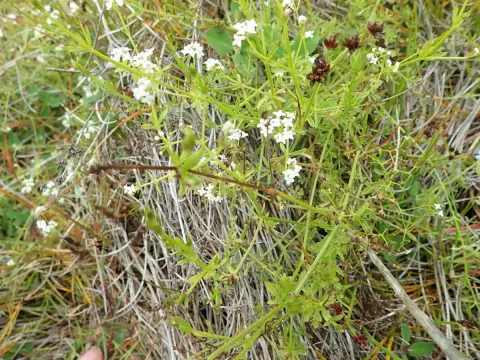
Marsh bedstraw
Galium palustre
Marsh bedstraw (Galium palustre) is a perennial herbaceous plant belonging to the Rubiaceae family. It is naturally distributed across temperate zones of Europe, Asia, and North America, typically thriving in aquatic or semi-aquatic habitats.
What the section contains
Marsh bedstraw
Botanically, the plant is characterized by its slender, often scrambling stems and leaves arranged in whorls. Its small, white flowers emerge in loose clusters, typically blooming throughout the summer months in favorable environmental conditions.
The core requirement for this crop is high soil moisture. It is a true hydrophyte that excels in wetlands, marshes, stream banks, and poorly drained meadows where water saturation inhibits the growth of conventional field crops.
This plant prefers neutral to slightly acidic soil conditions rich in organic matter. It exhibits strong cold hardiness, allowing it to survive harsh winters in northern latitudes without specialized protection or field coverage.
In terms of agricultural management, the plant does not require high levels of chemical intervention. Proper irrigation management or maintaining a high water table is the primary factor in ensuring consistent growth and development.
Fungal pathogens, particularly those thriving in humid environments like rusts, represent the primary disease threat. Poor ventilation in dense stands can exacerbate these issues significantly.
Insect pests, such as leaf beetles, can occasionally cause damage to the foliage. However, in balanced ecosystems, natural predators usually keep these pest populations below the economic threshold.
Habitat destruction remains the most significant threat to the survival and productivity of this species, particularly land drainage projects which render the soil unsuitable for its growth.
Competitive pressure from invasive wetland weeds often forces the crop out of its native habitat, necessitating manual or selective mechanical weeding in controlled environments.
Monitoring the moisture levels and avoiding excessive chemical runoff into the habitat are essential strategies to prevent environmental stress and secondary infection in the crop stands.