
Bridal wreath spirea
Spiraea prunifolia Siebold & Zucc.
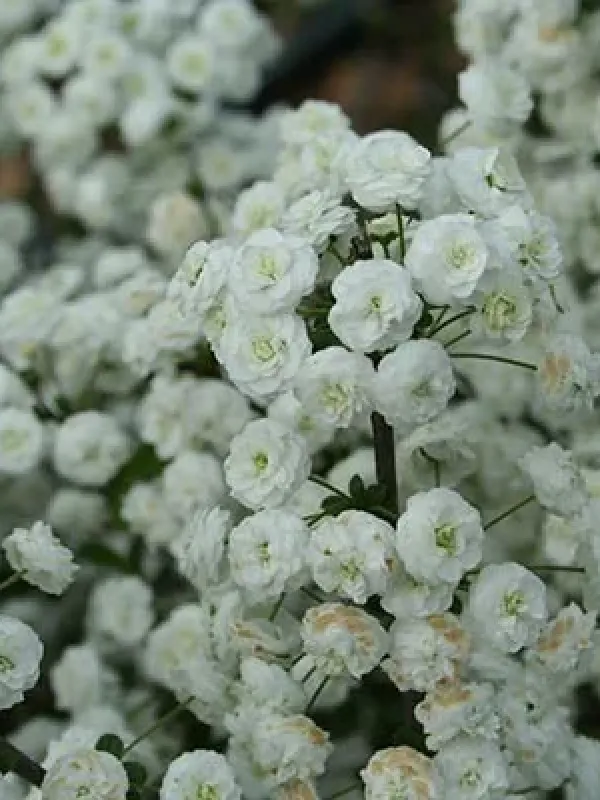
Description
Growing requirements
Bridal wreath spirea (Spiraea prunifolia) is a deciduous shrub that belongs to the Rosaceae family. It is highly esteemed in horticulture for its spectacular white blossoms that cover the arching branches in early spring, creating a cascading visual effect.
Originally native to Eastern Asia, including Japan, Korea, and China, the plant has become a popular ornamental species in many temperate regions. It thrives in locations that provide plenty of sunlight, which is crucial for encouraging dense flowering and vibrant autumn leaf color.
The ideal soil for this species is well-drained, fertile, and slightly acidic to neutral in pH. While the shrub is somewhat adaptable, it performs best when the root zone is kept moist but not waterlogged, requiring effective drainage systems to prevent root rot during rainy seasons.
Agrotechnical care includes routine pruning immediately after the flowering period. This promotes the growth of new, vigorous stems for the following season. Additionally, mulching around the base of the shrub helps maintain soil moisture levels and reduces the competitive pressure from surrounding weeds.
The primary use of this shrub is in landscape architecture. It is commonly utilized as a specimen plant, in mixed shrub borders, or as a decorative hedge. Its elegant form and seasonal changes in foliage color make it a versatile choice for residential and public park designs.
Main diseases and pests
While generally hardy, Spiraea prunifolia can face challenges from common pests such as aphids and spider mites. These insects tend to colonize the undersides of leaves and young stems, extracting plant sap and potentially causing stunted growth or leaf curling.
Fungal issues, particularly powdery mildew, are significant threats during periods of high humidity or poor air circulation. The characteristic white fungal growth can detract from the plant's aesthetic value and negatively affect its overall vigor if left untreated.
Effective management involves monitoring plant health and applying appropriate insecticides or fungicides at the early onset of symptoms. Using biological control methods or environmentally friendly soaps can also be effective for minor pest infestations without harming beneficial insects.
Good horticultural practice serves as the best defense against diseases. This includes adequate spacing between plants to ensure good airflow and the consistent removal of dead or diseased woody material to minimize the risk of pathogen spread within the garden area.
- Ensure proper air circulation through regular thinning.
- Monitor plants regularly for signs of leaf discoloration.
- Maintain balanced fertilization to prevent excessive succulent growth.