
Nippon spirea
Spiraea nipponica Maxim.
Description
Growing requirements
Nippon spirea (Spiraea nipponica) belongs to the Rosaceae family. It is a deciduous shrub native to Honshu, Japan, prized globally for its high ornamental value.
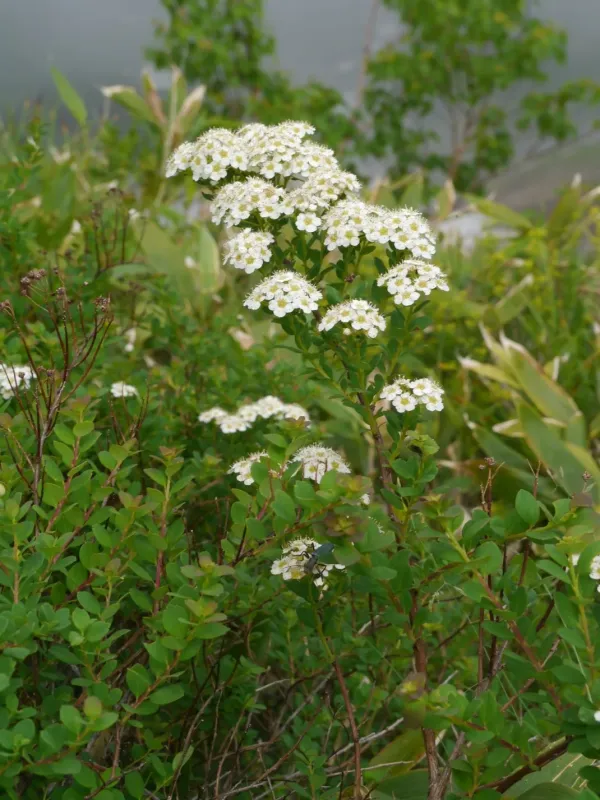
The botanical structure of the shrub features a dense, rounded habit. During the blooming season, the branches are covered in corymbs of small, brilliant white flowers, creating a dramatic display.
The plant thrives in full sun but can tolerate partial shade. It prefers fertile, well-drained soil with a neutral to slightly acidic pH, ensuring that the roots do not sit in waterlogged conditions.
Agricultural practices for this shrub involve consistent watering during dry periods and mulching the root zone. Regular pruning after flowering helps maintain the shape and encourages vigorous growth.
Its primary use is in landscaping. It is highly valued for formal and informal hedges, foundation plantings, and as a focal point in flower beds due to its compact and tidy growth habit.
Main diseases and pests
Aphids are common pests for Nippon spirea. They congregate on new growth, sucking nutrients and causing curling leaves, which can reduce the overall health of the shrub.
Spider mites can become a problem in hot and dry climates, leading to chlorotic or stippled foliage if the plant is not adequately irrigated during the summer heat.
Powdery mildew represents the main fungal threat, appearing as a dusty white coating on leaves, especially in areas with high humidity and poor air circulation.
Integrated pest management, including the use of horticultural soaps or systemic insecticides, is recommended when pest populations exceed acceptable thresholds.
Good cultural hygiene is essential to prevent disease outbreaks, which includes ensuring sufficient spacing between plants and removing any dead wood to allow for better airflow within the canopy.