
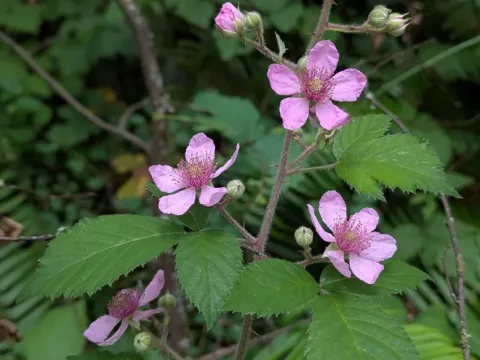
Rubus vestitus
Rubus vestitus
Rubus vestitus, commonly known as a type of European blackberry, belongs to the Rosaceae family. It is a perennial shrub recognized by its distinctively hairy canes and vigorous growth habit, often forming dense thickets in its natural habitat.
What the section contains
Rubus vestitus
The plant originates from European forests and scrublands, favoring regions with temperate climate conditions. It thrives in areas that offer moderate rainfall and adequate protection from strong, desiccating winds, which could otherwise damage the young shoots.
Optimal soil conditions for this culture include well-drained loamy soils rich in organic matter. A slightly acidic to neutral pH level is preferred to ensure proper nutrient uptake, particularly microelements necessary for the development of healthy foliage and canes.
Successful cultivation relies on the use of trellis systems to train the biennial canes. Proper spacing ensures sufficient air circulation, which is critical for reducing humidity levels around the plant and preventing the onset of various physiological disorders.
Water management is a key aspect of agronomy for this species. During the fruit-setting stage, consistent moisture is required to produce high-quality, plump berries. Drip irrigation systems are recommended to deliver water directly to the root zone efficiently.
The total yield per plant is significantly influenced by the level of winter protection and the previous season's pruning. Ensuring that the crown remains insulated during harsh winters preserves the dormant buds, which are essential for spring growth.
Fungal pathogens such as Cane Blight pose a significant threat to the health of the plants. Sanitation measures, including the removal of dead or diseased wood immediately after the harvest season, are essential to minimize the inoculum in the field.
Pests like spider mites and various aphids can infest the undersides of leaves, causing wilting and reduced vigor. Integrated pest management strategies, utilizing both natural predators and targeted biological controls, are highly effective for this crop.
Harvesting should be performed when the berries are fully mature and show a deep, uniform color. The berries are highly perishable; therefore, they should be handled gently and placed into shallow containers to prevent bruising during transport.