
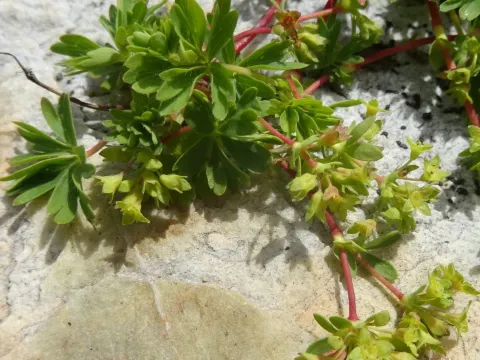
Alchemilla pentaphylla
Alchemilla pentaphylla
Alchemilla pentaphylla, commonly known as the five-leaf lady's mantle, is a perennial herb belonging to the Rosaceae family. This species originates from the high-altitude regions of the Alps, where it typically colonizes rocky crevices, scree slopes, and alpine meadows at significant elevations.
What the section contains
Alchemilla pentaphylla
Botanically, this species is distinct due to its palmate leaves, which are divided into five serrated segments. The plant forms low, dense mounds that rarely exceed 15 centimeters in height. Its fine-textured foliage and delicate growth habit make it a prized specimen for specialized rock garden collectors.
Cultivation requirements for this plant focus on replicating its mountainous habitat. It demands cool temperatures, high light intensity, and excellent soil drainage. It thrives in gritty, mineral-rich substrates and is highly intolerant of waterlogged conditions, which lead to root rot during the dormant season.
In terms of climate, Alchemilla pentaphylla is exceptionally cold-hardy, surviving harsh winters under snow cover. However, it struggles in hot, humid lowland summers. Providing a location with partial afternoon shade and good air circulation is essential to prevent physiological stress and heat-induced wilting.
The primary use of this plant is ornamental, particularly in alpine rockeries and troughs. Due to its slow and controlled growth rate, it is also highly valued as a niche groundcover for small, shaded garden areas where it can provide consistent greenery without overwhelming neighboring plants.
The main threats to Alchemilla pentaphylla involve fungal pathogens favored by stagnant air and damp soil, such as downy mildew and leaf spots. Proper site selection and maintaining a sterile, gritty growing medium are the best preventative measures against these opportunistic infections.
Pest issues are generally minimal but can include infestations of spider mites, especially if the plant is grown in overly dry or hot environments. Monitoring for leaf yellowing and web structures is recommended during the growing season to ensure timely intervention and maintain plant vigor.