
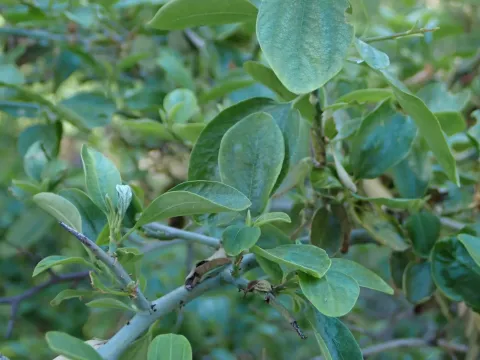
Whitestem Ceanothus
Ceanothus incanus
Whitestem Ceanothus (Ceanothus incanus) is a member of the Rhamnaceae family, native to the coastal ranges of California. This evergreen shrub is highly valued for its rugged appearance and its ability to thrive in harsh, sun-drenched environments.
What the section contains
Whitestem Ceanothus
The plant features distinct, often thorny branches and leaves that are greyish or white-tomentose on the underside, which gives the species its common name. The aesthetic value is highlighted by clusters of delicate flowers that provide significant visual interest in spring.
Successful cultivation requires a location with full sun exposure and exceptional soil drainage. The species is highly sensitive to root rot, making it unsuitable for heavy clay soils that retain moisture for extended periods after irrigation or rainfall.
Regarding soil composition, it prefers lean, slightly acidic to neutral soils. Excessive nitrogen fertilization should be strictly avoided as it can cause rapid, weak growth and make the plant more susceptible to environmental stresses and pest infestations.
Maintenance is relatively low once the plant is established. Supplemental watering may be required during the first growing season in arid climates, but mature specimens are remarkably drought-tolerant and perform best with minimal human interference.
The primary threat to the health of Whitestem Ceanothus is fungal root disease, often triggered by overwatering or poor drainage. Maintaining a dry root zone during dormant periods is essential for longevity.
Pest issues often include infestations of aphids or scale insects. Monitoring the underside of the foliage for these pests is recommended. Integrated pest management, including horticultural oils or biological controls, is preferred to maintain the health of the shrub.