
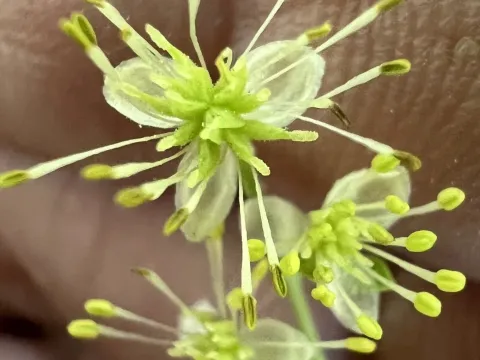
Few-flowered meadow-rue
Thalictrum sparsiflorum
Few-flowered meadow-rue (Thalictrum sparsiflorum) is a perennial herbaceous plant belonging to the Ranunculaceae family. It is naturally distributed across northern regions, adapted to moist environments and temperate climates, which defines its specific requirements for cultivation.
What the section contains
Few-flowered meadow-rue
The crop thrives best in moisture-retentive, fertile soils with a neutral to slightly acidic pH. Effective cultivation requires consistent soil moisture, often necessitating the selection of sites with high water tables or the implementation of reliable irrigation systems during the growing season.
In terms of climatic adaptation, this species prefers semi-shaded areas. Direct, intense sunlight can lead to excessive transpiration and physiological stress, so maintaining a balance between light exposure and humidity is essential for optimal biomass production.
Management practices include careful soil preparation, incorporating organic matter to improve soil structure and fertility. Since the plant is sensitive to weed competition, especially in its initial stages, regular cultivation and weeding in the inter-row spaces are mandatory to prevent stunted development.
Fertilization regimes should focus on providing essential nutrients in early spring to support vigorous leaf growth. Mulching is highly recommended to regulate soil temperature and minimize evaporation, ensuring the roots remain in stable conditions throughout the summer months.
Common pathological threats include fungal infections such as powdery mildew and rust, particularly in stagnant, humid air conditions. Ensuring adequate spacing between plants improves airflow and serves as a primary cultural method for disease prevention and mitigation.
Pests, primarily aphids and leaf-rollers, may infest the foliage, impacting plant health. Integrated pest management strategies, utilizing both cultural practices and selective biopesticides, are recommended to control infestations without damaging the ecosystem or compromising plant health.