
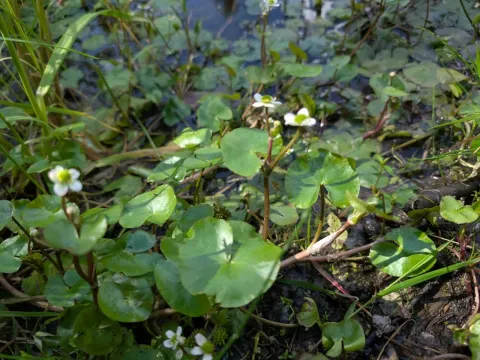
Floating marsh marigold
Caltha natans
Caltha natans, known as the floating marsh marigold, is a perennial herbaceous plant belonging to the Ranunculaceae family. It is a specialized aquatic plant native to northern temperate regions.
What the section contains
Floating marsh marigold
Propagation is primarily done via seeds, which should be sown immediately after collection in the autumn to ensure they undergo the necessary cold stratification period.
Vegetative propagation via rootstock division is an alternative method, best performed in early spring as the plant begins its active growth phase after winter dormancy.
When sowing, seeds should be placed on a moist, nutrient-rich substrate, simulating the shallow muddy banks of their natural aquatic habitat.
Maintaining a constant moisture level is critical during the germination stage, as the seeds require specific environmental cues to break dormancy.
The plant thrives in shallow water environments, typically requiring a water depth of 5 to 15 centimeters to support its growth and floating habit.
Ideal soil conditions include silty or peaty bottoms that are rich in organic matter and maintain a neutral to slightly acidic pH level for optimal nutrient uptake.
It prefers sunny locations, although it can tolerate partial shade, provided the water temperature does not remain excessively high during peak summer months.
The floating marsh marigold requires stagnant or very slow-moving water, as strong currents can uproot the plants and damage the developing root system.
It is highly winter-hardy and capable of surviving in frozen water bodies, making it a reliable choice for gardens in cold climates.
The primary use of Caltha natans is in water gardening and landscaping, where it serves as a valuable plant for pond edges and shallow wetland areas.
Beyond its aesthetic appeal, it acts as an effective phytoremediator, helping to maintain water quality by absorbing excess nutrients and providing habitat for aquatic organisms.
The density of the plant cover depends largely on the availability of nutrients in the bottom sediment, with vigorous growth observed in nutrient-rich pond environments.
Flowering period increases the ornamental value of the plant, producing small, delicate flowers that attract pollinators and enhance the biodiversity of the aquatic site.
Proper density management allows the plants to create a natural, lush covering on the water surface, contributing to the overall health of the ecosystem.
Major threats to the species include aquatic fungal diseases that can manifest when water circulation is poor or if the pond environment becomes stagnant.
Pests such as aquatic larvae may feed on the stems and leaves, potentially weakening the plant if infestations are not controlled promptly.
Competition from filamentous algae is a common issue; algae can overgrow the marsh marigold, blocking sunlight and depleting available nutrients in the water.
Chlorosis, resulting from nutrient imbalances, often causes yellowing leaves, which requires immediate water testing and the addition of aquatic plant fertilizers.
Regular maintenance, including the removal of decaying organic material, is necessary to prevent water quality degradation that could negatively impact the plant.