
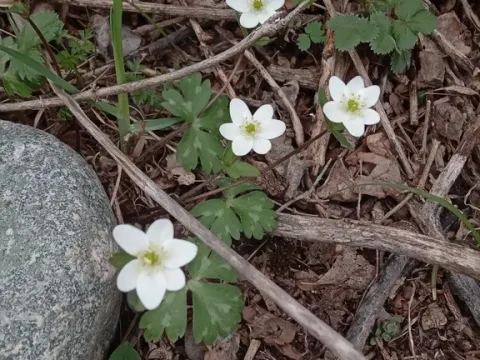
Falconeri's Hepatica
Hepatica falconeri
Propagation of Hepatica falconeri in cultivation is primarily carried out by seed or by division of the rhizome. Freshly harvested seeds should be sown in the open ground immediately after ripening in late spring or early summer, as they quickly lose their viability.
What the section contains
Falconeri's Hepatica
When sowing, seeds require a period of stratification; therefore, late-autumn sowing in protected nursery beds is considered the most effective method for achieving uniform germination. Seeds should be sown no deeper than 0.5–1 centimeter in a light substrate.
Dividing the plant is recommended to be carried out in early spring, before the onset of active growth, or in late summer when the plant is in a state of relative dormancy. It is important to provide the divisions with sufficient moisture to ensure survival in the new location.
Young plants require careful transplantation while maintaining the soil ball, as the hepatica root system is quite sensitive to mechanical damage.
When planting dates are observed, the plant usually begins to bloom in the second or third year after sowing, gradually forming a dense decorative clump.
Falconeri's Hepatica belongs to the Ranunculaceae family and is an endemic plant with a restricted range in the mountain regions of Central Asia. Culturally, it prefers semi-shaded areas protected from direct midday sunlight.
The crop is highly demanding of soil composition; it must be loose, fertile, rich in leaf mold, and possess a neutral to slightly acidic pH level.
An important factor for success is drainage, as the plant cannot tolerate water stagnation at the roots, particularly during winter thaws or early spring.
It demonstrates high winter hardiness in temperate climates, although during snowless winters, light coverage with dry leaves is recommended to protect the root system from freezing.
During the growing season, the plant requires regular but moderate watering to prevent the root ball from drying out, as the natural habitat of this species is characterized by constant humidity.
The primary threats to Hepatica falconeri when agronomic practices are neglected are fungal diseases, such as root rot, which develop under conditions of excessive soil moisture.
Powdery mildew may affect the foliage in conditions of poor air circulation and high humidity, requiring immediate treatment with systemic fungicides.
Regarding pests, the greatest danger is posed by snails and slugs, which actively feed on young leaves and flower stalks during the spring season.
To prevent pest infestation, it is recommended to mulch the soil with gravel or utilize special barrier traps around the planting site.
Disease prevention consists of strictly following watering schedules, timely removal of plant debris, and maintaining optimal planting density to ensure good airflow.